14 Transitional Design Ideas That Make Any Home Feel Balanced and Warm
Picking a design style for your home can feel confusing. You like modern furniture, but you also love cozy, classic details, and you don’t want to choose just one. This is where transitional design comes in. It blends clean modern lines with traditional comfort, so your home feels current without losing its warmth.
This mix works because it is flexible. You don’t have to follow strict rules or stick to one era of furniture. You can pair a sleek sofa with an antique side table, or mix a modern light fixture with classic molding, and it still looks put together.
Below are 14 transitional design ideas to help you plan a home that feels both fresh and timeless. Each idea comes with an image prompt so you can picture the look before you start decorating.
1. Transitional Living Room with a Neutral Palette
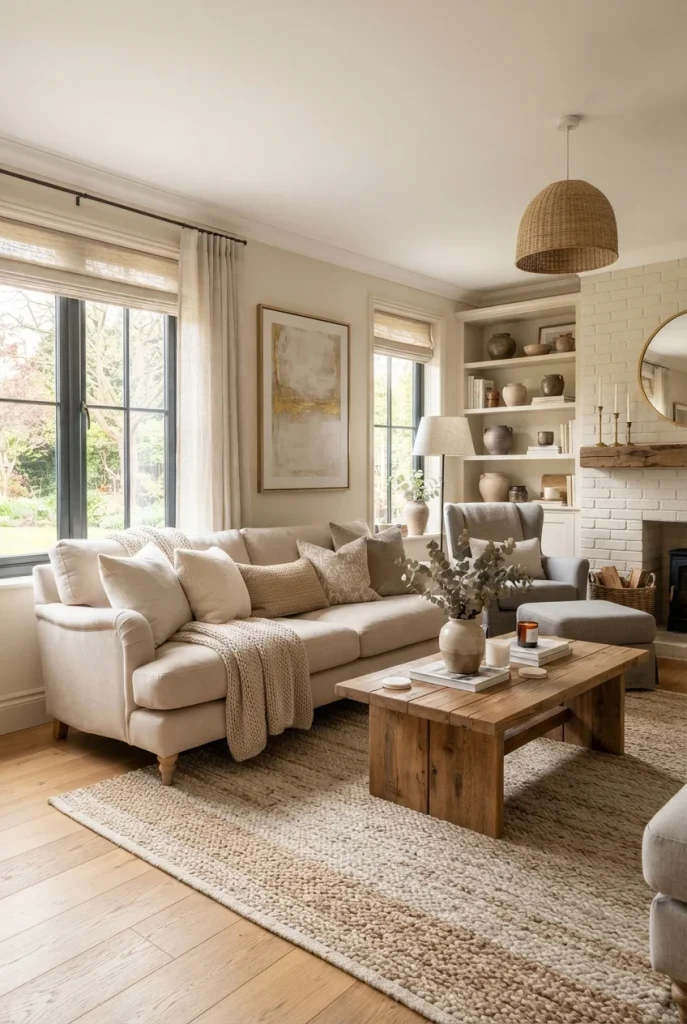
A neutral palette is the foundation of most transitional living rooms. Think soft whites, warm beiges, and muted greys that create a calm backdrop for everything else in the room. These colors are easy to live with, and they don’t go out of style the way trendy colors sometimes do.
The beauty of a neutral base is that it lets your furniture and textures do the talking. A cream sofa paired with a wooden coffee table and a jute rug already feels balanced without much extra effort. You can add small pops of color through pillows or artwork if you want a bit more personality.
This approach also makes it easier to update your space over time. Since the walls and big furniture pieces stay neutral, you can switch out accessories with the seasons or as your taste changes. It’s a low-stress way to keep your living room feeling fresh year after year.
2. Mixing Modern and Traditional Furniture
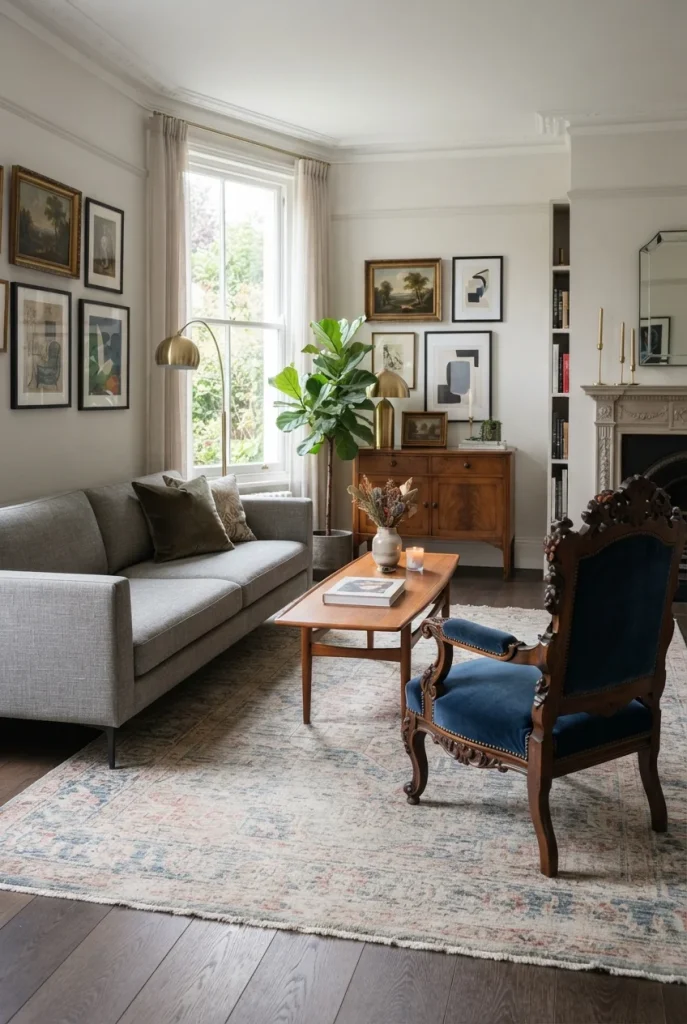
One of the easiest ways to get the transitional look is by mixing furniture from different eras. Pair a simple, streamlined sofa with a more ornate, traditional armchair. The contrast between the two styles is what makes the room feel interesting instead of flat.
This mix works best when there’s a common thread tying the pieces together, like matching wood tones or a shared color in the fabric. For example, a modern glass coffee table can sit comfortably next to a vintage wingback chair if they share a similar color scheme. The goal is balance, not chaos.
Don’t be afraid to shop secondhand or inherited furniture for this style. A grandmother’s antique dresser can look surprisingly fresh next to a modern platform bed. Mixing old and new pieces also makes your home feel more personal, since it’s not just furniture bought all at once from one store.
3. Transitional Kitchen Cabinets
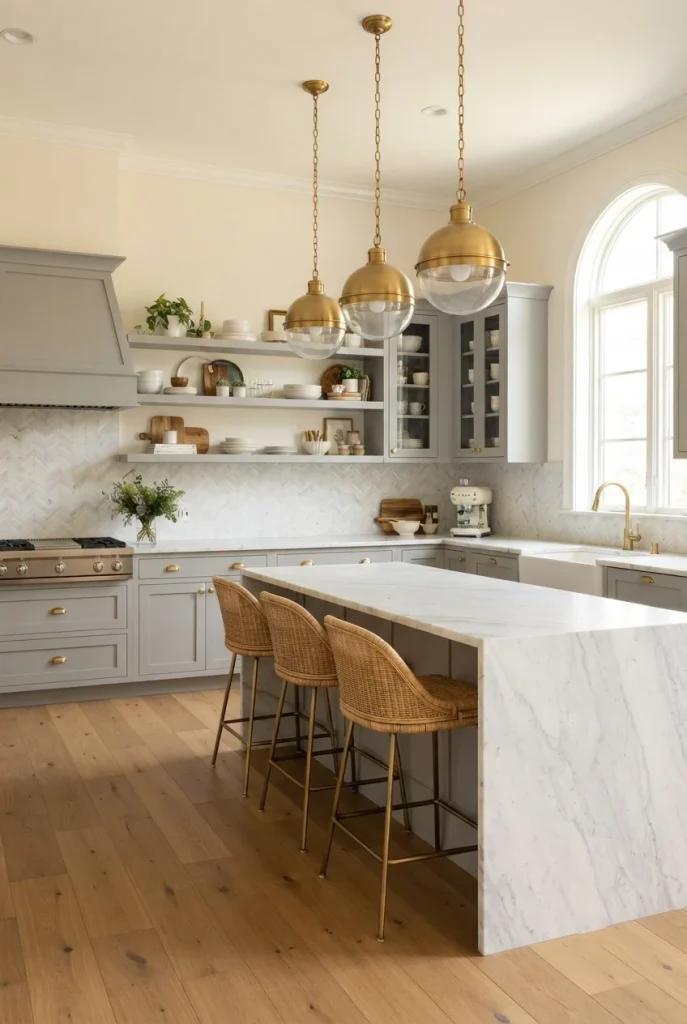
Shaker-style cabinets are a favorite in transitional kitchens because they sit right in the middle of modern and traditional design. Their simple, flat panel doors feel clean and current, but the classic frame still gives a nod to older kitchen styles. This makes them a safe, long-lasting choice for any kitchen remodel.
Color choice matters a lot here too. Soft greys, warm whites, and muted blues are common because they feel updated without being too bold. Pairing these cabinets with natural stone countertops, like marble or quartz with subtle veining, adds another layer of texture that feels both modern and timeless.
Hardware is a small detail that makes a big difference. Brass or matte black pulls on shaker cabinets instantly elevate the look and tie the kitchen to the rest of a transitional home. Even a small kitchen update, like swapping hardware and adding a classic pendant light, can shift the whole space toward this balanced style.
4. Layered Textures for a Transitional Feel
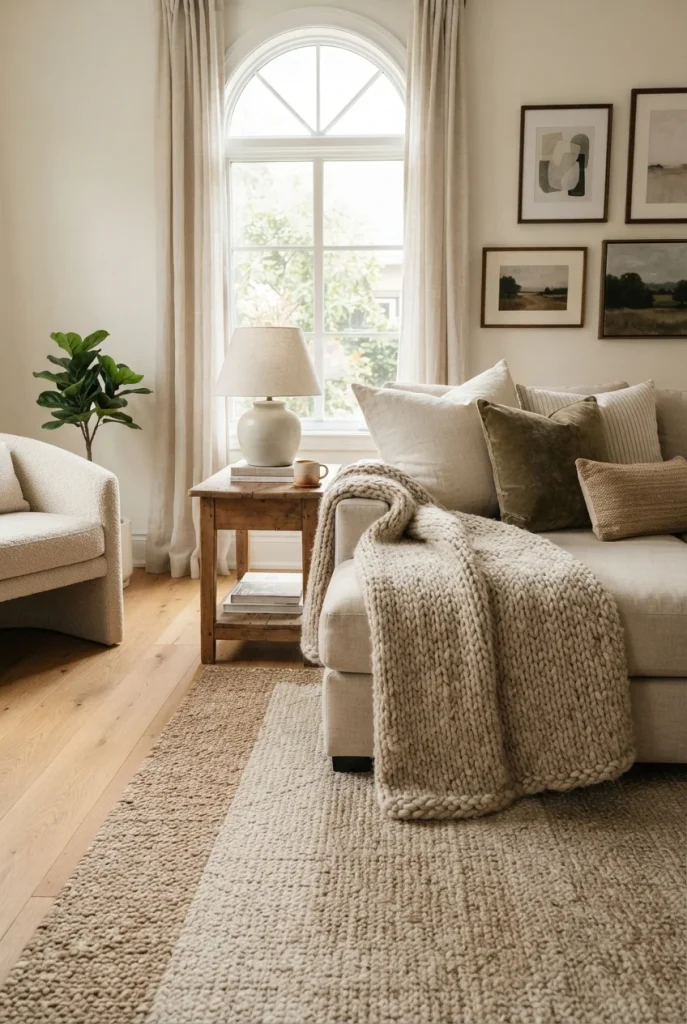
Texture plays a huge role in transitional design because it adds depth without adding color or clutter. Think of a smooth leather chair next to a chunky knit throw, or a woven rattan basket sitting beside a linen sofa. These small contrasts in texture keep a neutral room from feeling boring or flat.
Layering also helps soften a space that leans too modern or too sparse. A room with sleek, straight-lined furniture can feel cold on its own, but adding a soft area rug or a stack of textured pillows brings warmth back in. It’s a simple trick that designers use again and again because it works so well.
You don’t need to overthink texture layering. Start with one or two soft elements, like a throw blanket and a textured rug, then build from there. Over time, you can add woven baskets, linen curtains, or a wood-framed mirror to keep building on that cozy, lived-in feel.
5. Transitional Bedroom Design
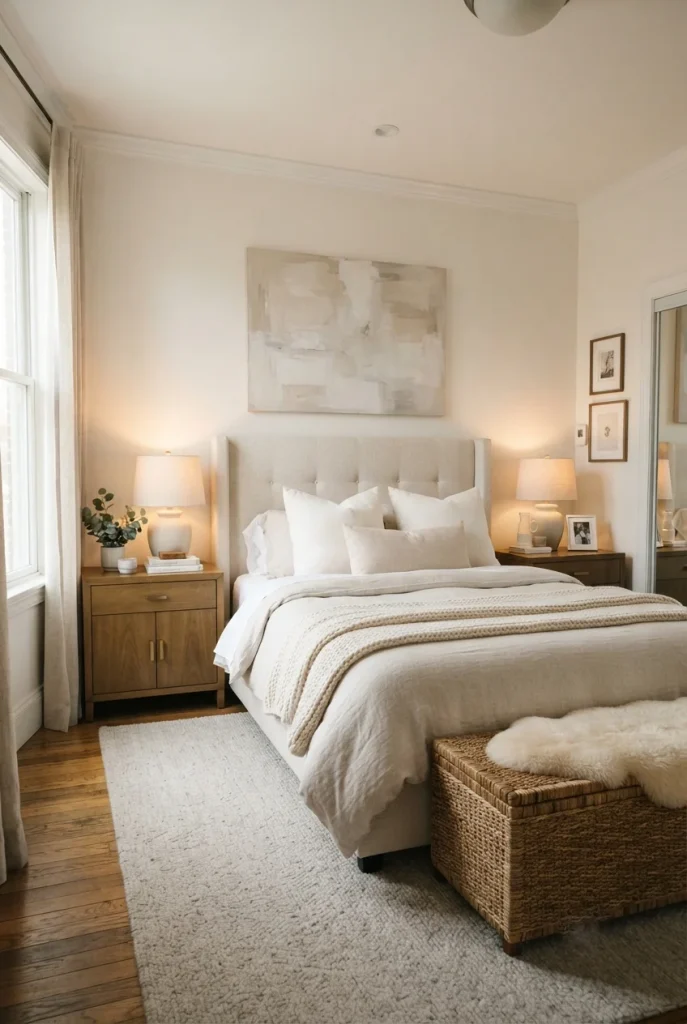
A transitional bedroom is all about creating a calm, restful space using simple furniture and soft colors. An upholstered headboard is a common starting point, since it adds a touch of softness without feeling overly formal. Pair it with crisp white or neutral bedding to keep the whole look clean.
Wood tones bring warmth into the room and balance out the softer fabric elements. A simple wood nightstand or dresser next to an upholstered bed frame creates that classic transitional contrast between hard and soft materials. This mix keeps the bedroom from feeling too soft or too sterile.
Lighting also matters more than people expect in a bedroom. Soft, warm bulbs in simple lamp bases add coziness without competing with the rest of the decor. A few personal touches, like a favorite book on the nightstand or a small plant, help the room feel like a lived-in retreat rather than a showroom.
6. Statement Lighting Fixtures
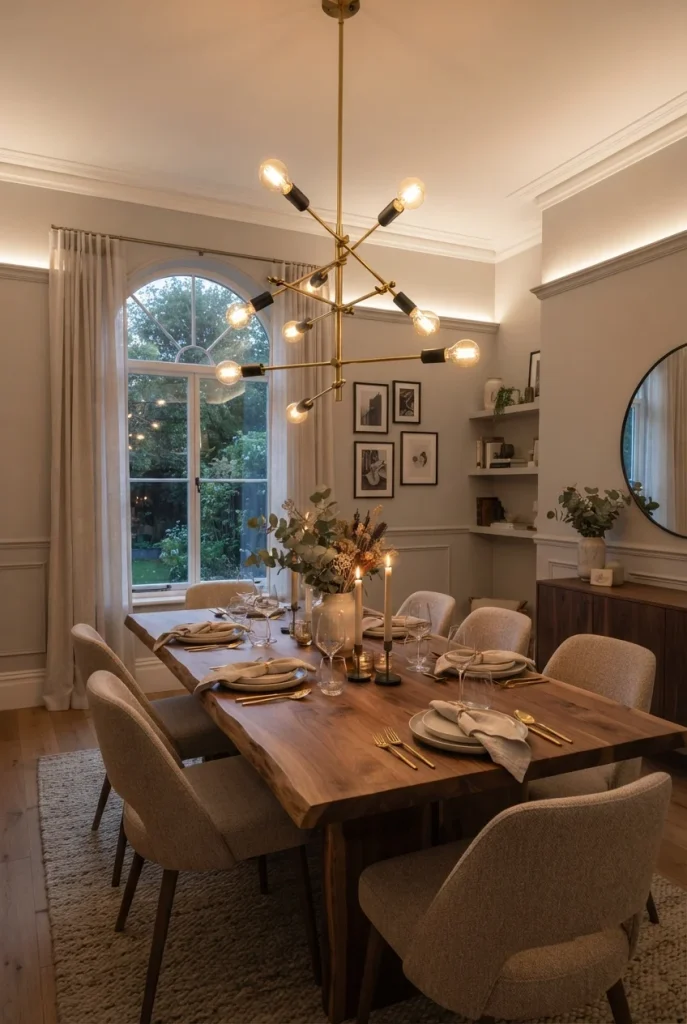
Lighting is one of the fastest ways to add personality to a transitional home. A statement chandelier or pendant light that mixes clean lines with classic materials, like brass or aged bronze, instantly draws the eye. It becomes a focal point that ties the whole room together.
The trick with transitional lighting is choosing fixtures that aren’t too modern or too traditional. A simple drum shade with metal accents, or a linear chandelier with a bit of curve to it, hits that middle ground. These fixtures work in dining rooms, entryways, and even bathrooms.
Don’t underestimate how much a light fixture can change the feel of a room. Swapping an old, plain fixture for one with a bit more character can make a space feel updated, even if nothing else changes. It’s one of the more affordable transitional design ideas that gives a big visual return.
7. Transitional Color Schemes
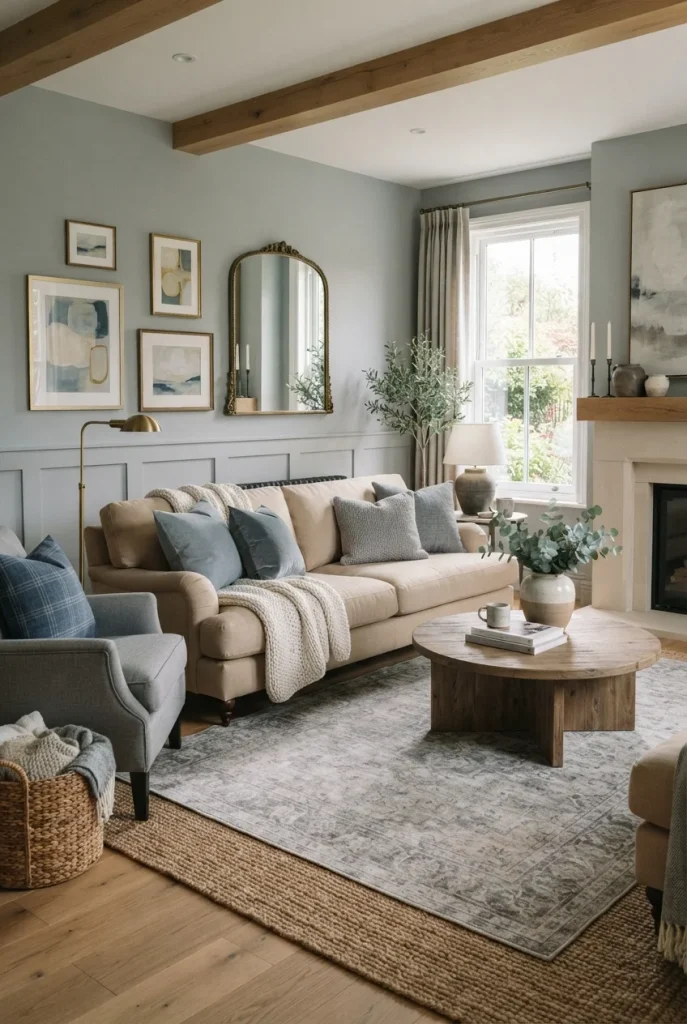
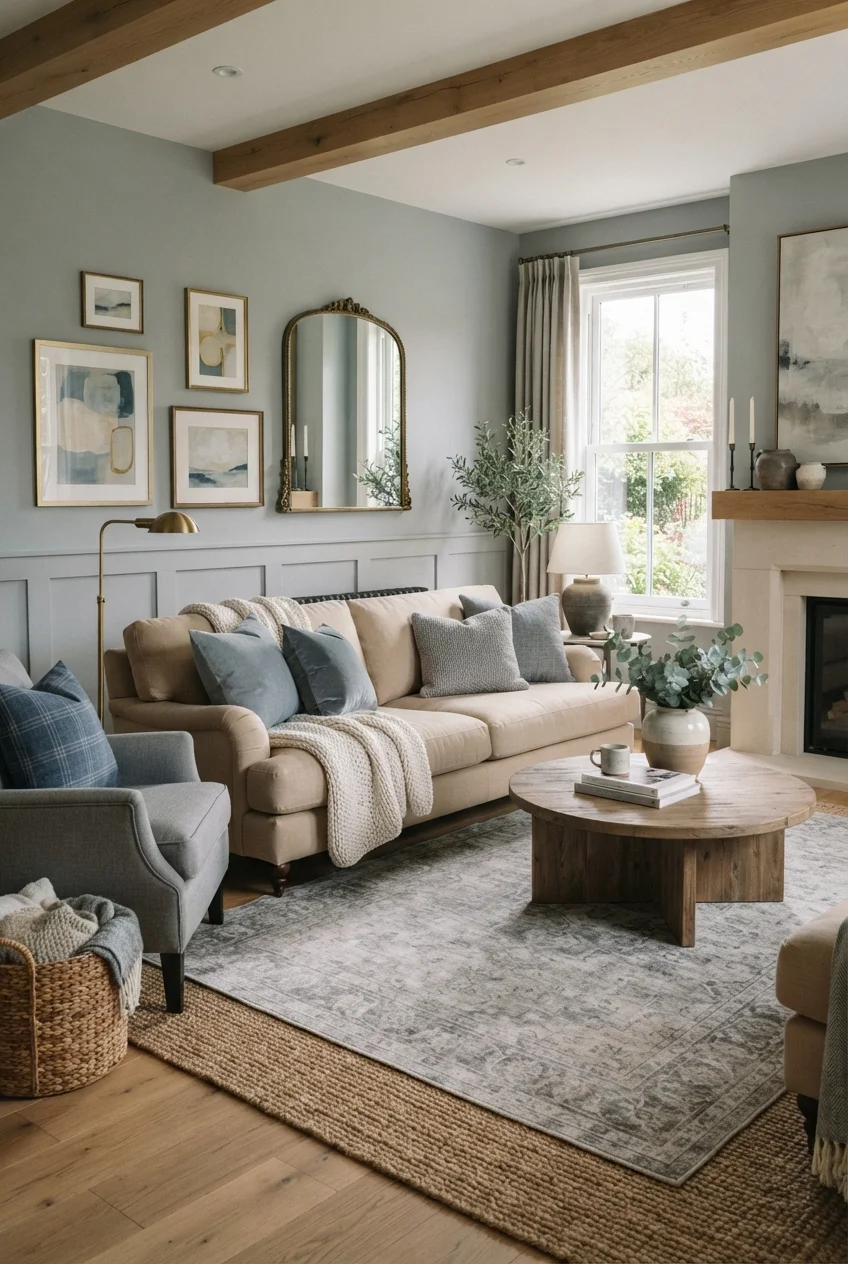
Transitional color schemes tend to stay soft and muted rather than bold or bright. Warm beiges, soft greys, and gentle blues are common choices because they create a calm backdrop that works with almost any furniture style. These colors also age well, so you won’t feel the need to repaint every few years.
Using color in layers is a big part of this style. Start with a neutral wall color, then add slightly deeper tones through furniture, like a charcoal sofa or a navy accent chair. Finish with small pops of color in pillows, art, or vases to keep the room from feeling too flat.
If you want a bit more contrast, try pairing warm neutrals with cooler tones, like a beige room with soft grey or sage accents. This kind of subtle contrast keeps a transitional room from feeling one-note while still staying calm and easy to live with.
8. Open Shelving with Classic Details
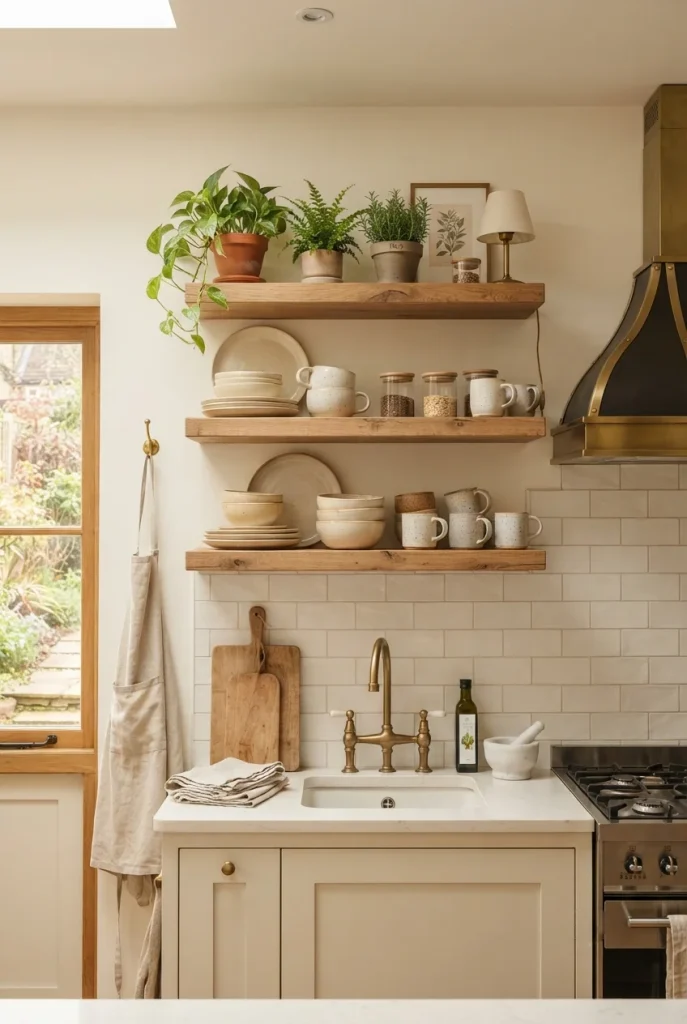
Open shelving is a popular feature in transitional kitchens because it feels both modern and practical. Simple wood shelves paired with classic white subway tile create that familiar mix of new and old. It also gives you a spot to display favorite dishes, glassware, or small plants.
The key to making open shelving look intentional is keeping it a little curated. Group items by color or shape, like stacking white plates together or lining up matching glasses, so the shelf doesn’t look cluttered. A few plants or a small piece of art can break up the rows of dishes nicely.
This idea works outside the kitchen too. Open shelving in a living room or hallway, styled with books, framed photos, and a few decorative objects, brings that same transitional balance into other parts of the home. It’s a simple way to display personal items while still keeping things looking tidy.
9. Transitional Dining Room Ideas
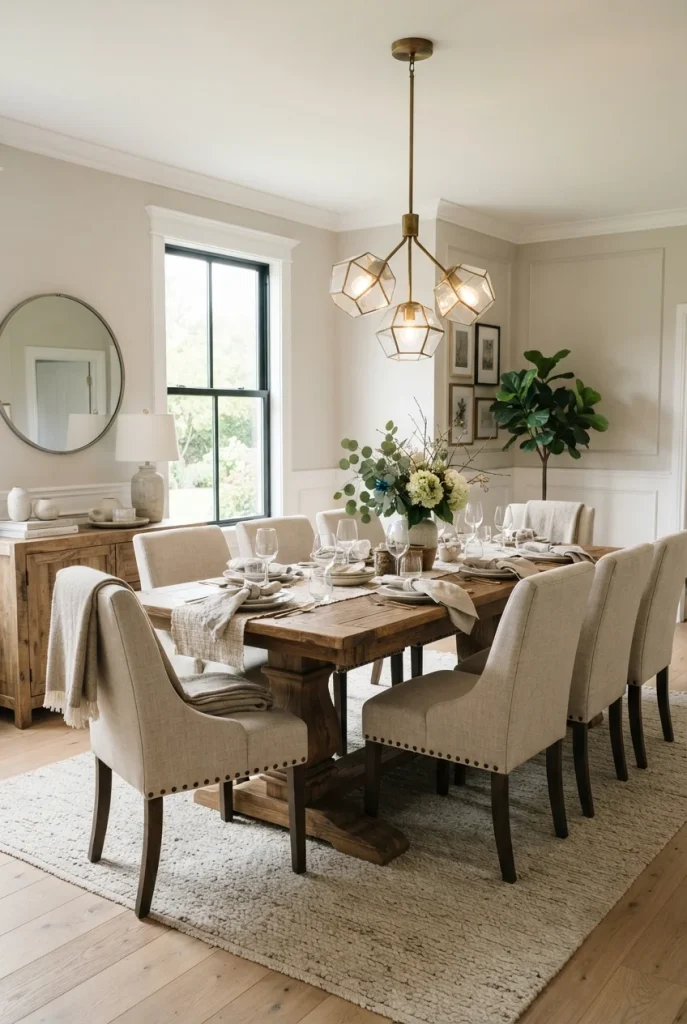
A transitional dining room often starts with the table. A simple wood table with clean lines works well because it’s flexible enough to pair with different chair styles. Adding upholstered chairs at the ends, with wood or metal chairs along the sides, is a classic transitional combination.
Lighting again plays a big role here. A pendant light or chandelier that mixes metal and glass, or a fixture with simple lines and a few classic details, ties the whole room together. This kind of lighting choice keeps the space from feeling too formal or too casual.
Layering in soft textiles, like table runners, seat cushions, or curtains, adds warmth to what could otherwise feel like a plain dining space. A few candles or a simple centerpiece finish the look without making the room feel overdone. This balance of simple and soft is what makes transitional dining rooms feel so welcoming.
10. Mixing Metals in Transitional Decor
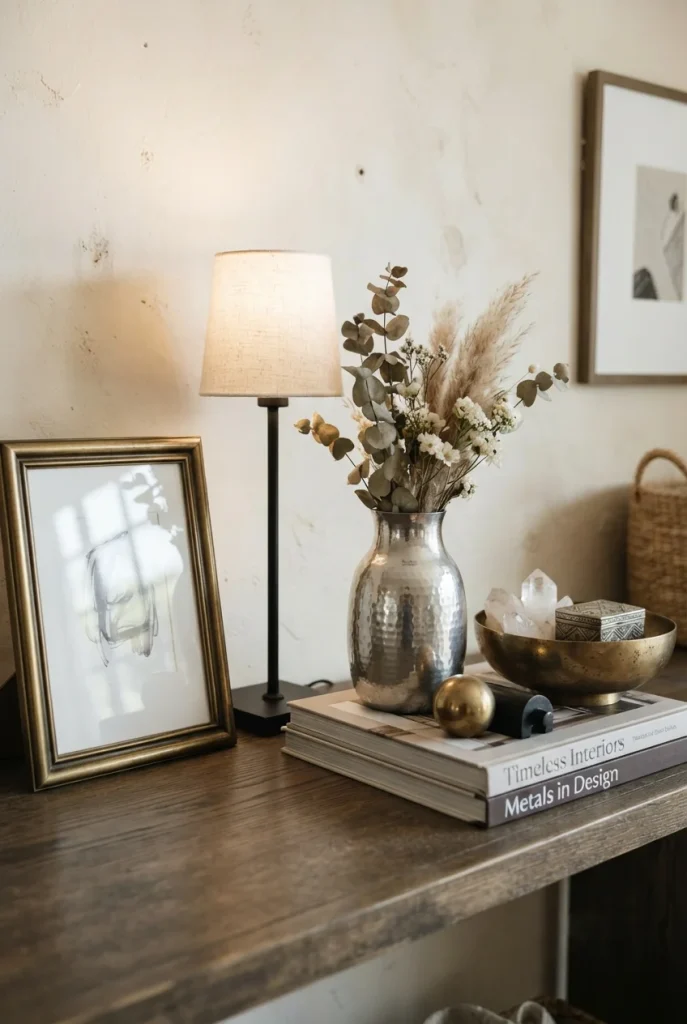
Mixing metals is a small detail that makes a transitional home feel more collected and less matched. Combining brass, black, and even a touch of silver or nickel throughout a space keeps things interesting instead of looking like everything came from one matching set. It’s a subtle way to add depth to your decor.
The easiest way to start is with lighting and hardware. A brass pendant light paired with black cabinet handles, or silver faucet fixtures next to a bronze mirror frame, shows how well mixed metals can work together. As long as there’s a dominant metal in the room, adding one or two accent metals feels intentional rather than random.
This idea also applies to smaller decor pieces, like picture frames, candle holders, and vases. Mixing a few different metal tones on a shelf or mantel adds visual interest without adding more color or pattern. It’s a favorite trick among home decor lovers because it’s such a low-cost way to update a space.
11. Transitional Bathroom Design
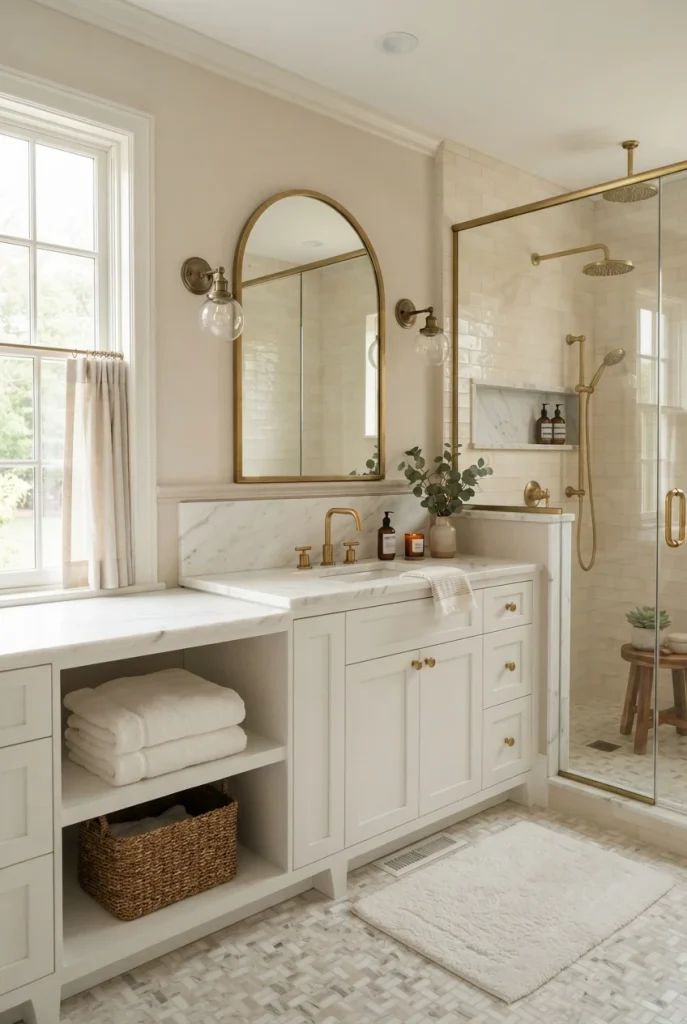
Transitional bathrooms often use the same shaker cabinet style found in kitchens, giving the whole home a consistent look. White or soft grey cabinets paired with brass or matte black fixtures create that classic-meets-modern feel. It’s a style that works whether you’re doing a full remodel or a small refresh.
Marble or marble-look countertops are another common choice, since the subtle veining adds a touch of elegance without being too flashy. Pairing this with simple, neutral tile on the floor or shower walls keeps the whole room feeling calm and cohesive rather than busy.
Small details finish the look, like a classic mirror with a thin metal frame or simple woven baskets for storage. These little touches add warmth to a room that can otherwise feel cold and clinical. A few plants or a textured bath mat also help soften the space nicely.
12. Window Treatments for Transitional Homes
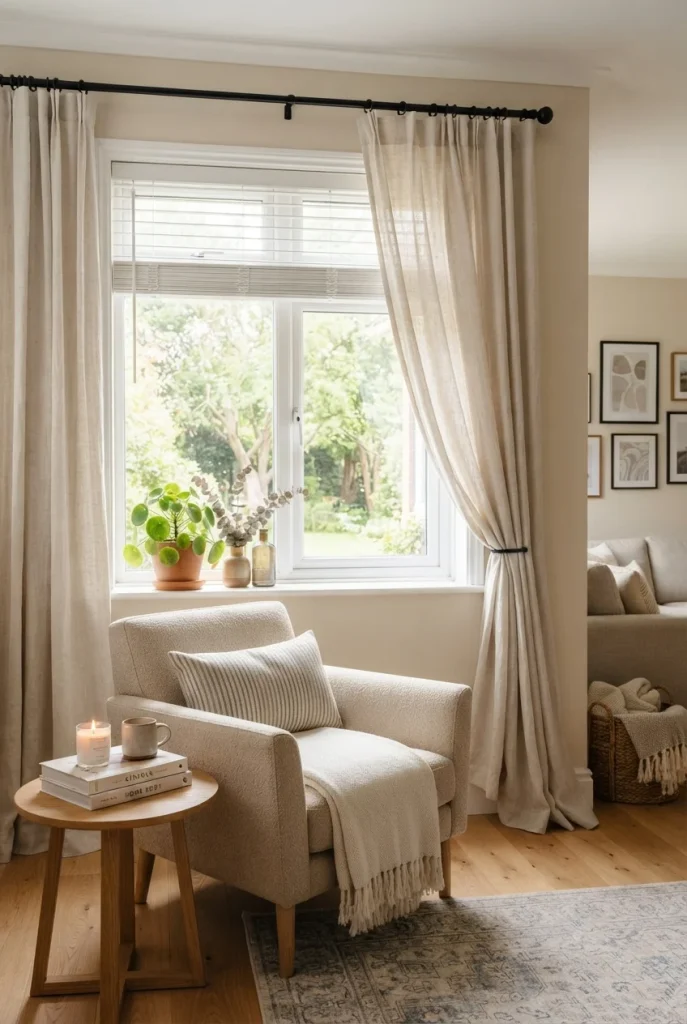
Window treatments are often overlooked, but they play a big role in pulling a transitional room together. Simple linen or cotton curtains in a neutral color are a common choice because they soften the light without blocking it completely. They also add a bit of texture to a room that might otherwise feel too plain.
Layering curtains with wood blinds or simple shades underneath gives you more control over light and privacy while adding another design layer. This combination is especially popular in living rooms and bedrooms, where you want both a soft look and practical function.
Hardware matters here too. A simple metal curtain rod, in brass or black, adds a small design detail that ties into the rest of the room’s metal finishes. It’s a small choice, but it helps window treatments feel like part of the overall design rather than an afterthought.
13. Transitional Entryway Ideas
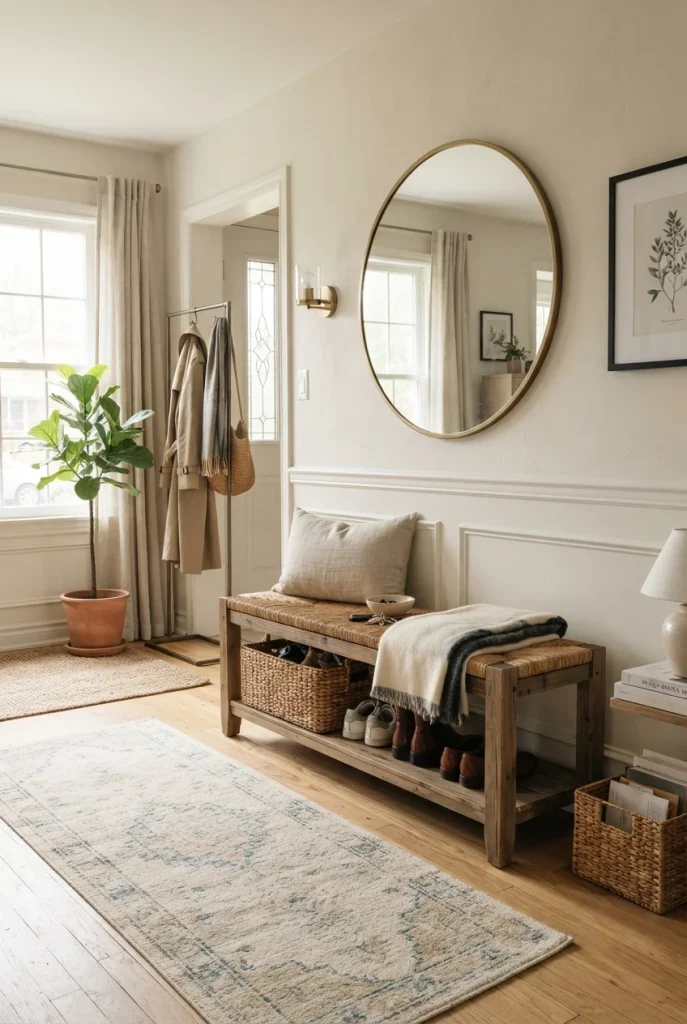
An entryway sets the tone for the rest of the home, so it’s worth giving it a little transitional touch. A simple wood bench near the door is both practical and stylish, giving guests a spot to sit while adding warmth to the space. Pair it with a woven basket for shoes or bags to keep things tidy.
A round mirror with a simple metal frame is another common entryway feature. It adds light to the space and gives a classic touch without feeling too traditional. Hanging it above the bench or a small console table ties the whole entryway together nicely.
Finish the space with a small rug and a few personal touches, like a vase of greenery or a small tray for keys. These little details make the entryway feel welcoming and lived-in, setting expectations for the balanced, comfortable style found throughout the rest of the home.
14. Accessorizing a Transitional Space
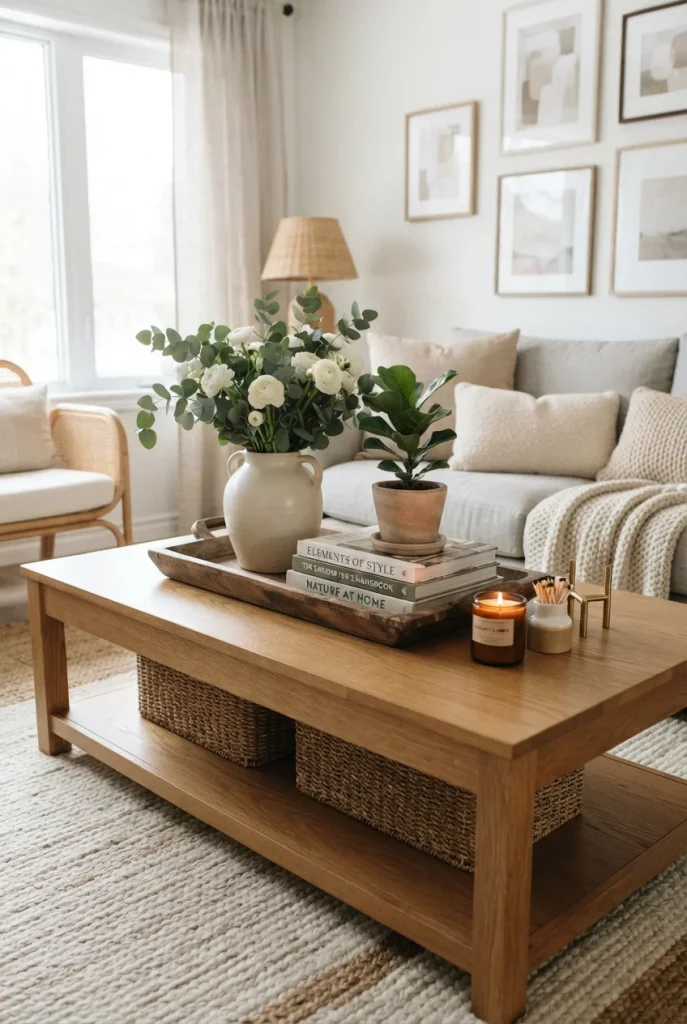
Accessories are where you can really show your personality within a transitional home. A mix of ceramic vases, stacked books, and a small plant on a coffee table brings that classic, collected look without feeling cluttered. The key is choosing pieces that feel personal but still fit the room’s overall neutral color scheme.
Trays are a simple trick to keep accessories looking organized. Grouping a candle, a small dish, and a stack of books on a wooden tray makes the whole arrangement feel intentional, even if the individual pieces are simple. It’s an easy way to style a coffee table or console without much effort.
Don’t forget texture when choosing accessories. A woven basket, a linen throw, or a textured ceramic bowl all add depth to a room in the same way furniture and rugs do. These small details are often what make a transitional space feel finished and warm rather than just decorated.
Final Thoughts
Transitional design works so well because it doesn’t ask you to pick a side between modern and traditional. It lets you mix a sleek sofa with an antique mirror, or pair shaker cabinets with brass hardware, and still end up with a home that feels calm, warm, and put together. Whether you’re updating one room or planning a full home refresh, these 14 transitional design ideas give you a simple, flexible starting point to create a space that feels both current and timeless.