14 Vertical Garden Ideas to Grow More in Less Space
Small yards and tiny balconies make gardening feel impossible, but that is not really true. Vertical garden ideas let you grow herbs, flowers, and even vegetables by using walls, fences, and railings instead of ground space. You do not need acres of land to have a green, lively space you love.
A vertical garden turns unused wall space into a living feature. It works for apartments, small patios, and even tight kitchen corners. Anyone with a little sunlight and a blank wall can start one this weekend.
In this list, you will find 14 creative ways to build a vertical garden that fits your space and style. Each idea is simple to copy and easy to personalise with plants you already love.
1. Wooden Pallet Planter Wall

A reclaimed wooden pallet is one of the easiest ways to start a vertical garden without spending much money. You stand the pallet upright, staple landscape fabric to the back and bottom, and fill each slat with soil. Herbs, succulents, and small flowers all do well in this setup because the wood naturally drains water.
This idea works beautifully on a patio, fence, or garage wall where you want texture without taking up floor space. The rustic look of the wood pairs nicely with both farmhouse and modern outdoor decor styles. Over time, the plants fill in the gaps and create a lush, layered wall of greenery.
Pallet gardens are also easy to move if you rent your home or want to change your layout later. You can lean it against a wall or hang it with sturdy brackets. Either way, it turns a piece of scrap wood into a real garden feature.
2. Hanging Shoe Organiser Garden

A canvas shoe organiser is a clever, low-cost tool for a vertical herb or vegetable garden. Each pocket becomes its own small planter, perfect for shallow-rooted plants like lettuce, basil, or strawberries. You hang the organiser on a fence, door, or railing and fill each slot with potting soil.
This idea is especially useful for renters or people with very limited outdoor space. It needs no drilling or permanent installation, so you can take it down whenever you like. The pockets also make watering simple since you can see every plant at a glance.
Because the fabric pockets are lightweight, this setup is easy to move if a plant needs more or less sun. It is a fun project to try with kids too, since each pocket can hold a different seed to watch grow. Within a few weeks, the plain organiser transforms into a colourful, edible wall.
3. Ladder Shelf Display

An old wooden ladder, either bought secondhand or built new, makes a charming plant display that uses height instead of floor space. Each rung holds a different pot, letting you mix trailing vines, leafy greens, and flowering plants at different levels. This layered look adds instant depth to a porch, balcony, or sunny indoor corner.
The ladder style works well because it lets air and light reach every plant, unlike stacked shelves that can shade lower rows. You can angle the ladder against a wall or use a freestanding A-frame ladder for more stability. Either way, it becomes a focal point that draws the eye upward.
This idea is also easy to update with the seasons—swap in mums and ornamental cabbage for fall, then bright annuals for spring. A ladder display feels less like a garden project and more like a piece of living furniture.
4. Rain Gutter Planter Rows
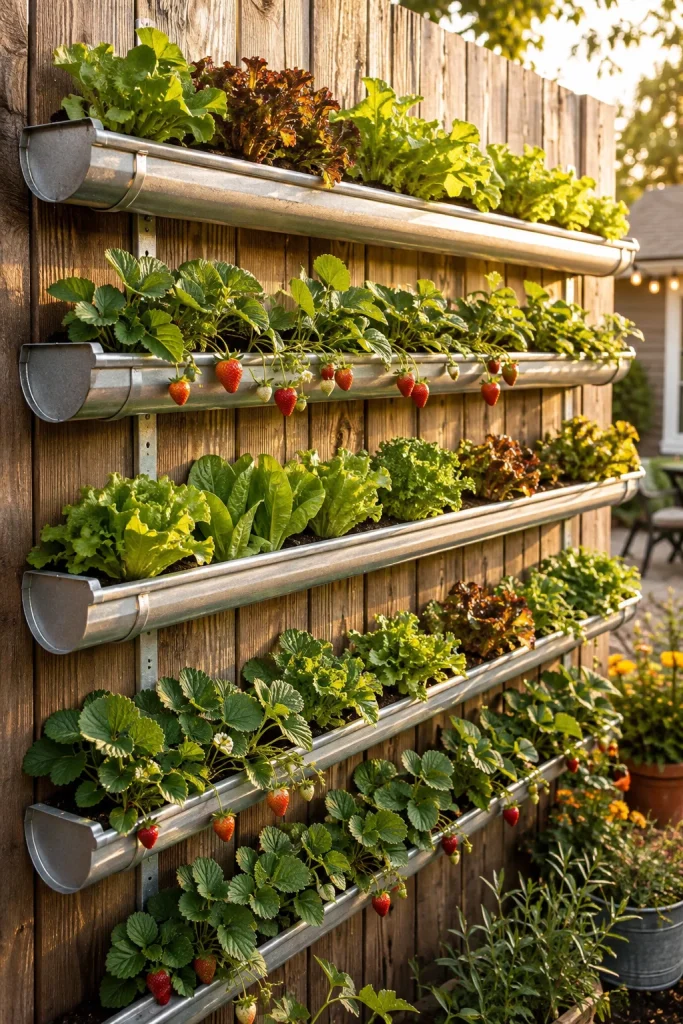
Rain gutters are not just for roofs. Mounted horizontally in stacked rows on a fence or wall, they create narrow, shallow planters perfect for lettuce, strawberries, and herbs. You drill drainage holes along the bottom, add end caps, and secure the gutters with simple brackets.
This vertical garden idea is a favourite for growing food in a small space because it keeps plants at an easy height for watering and harvesting. Since the gutters sit close together, you can fit several rows in the space a single ground bed would need. It is also a great way to keep low-growing crops away from slugs and other pests that crawl along the soil.
The metal or vinyl gutters can be painted to match your outdoor decor, so the setup looks intentional rather than makeshift. Many gardeners build a whole wall of these rows for a mini vegetable farm on a fence. It is functional, tidy, and surprisingly productive for how little space it takes.
5. Vertical Herb Tower

A stackable herb tower is one of the most space-efficient vertical garden ideas for anyone who cooks often. These planters come in circular or square tiers that twist together, letting you grow many different herbs in the footprint of a single pot. Basil, thyme, parsley, and mint all thrive when planted this way.
Because the tower rotates or has cutouts on multiple sides, every plant gets its share of sunlight without shading its neighbours. This makes it ideal for small patios, balconies, or even a sunny kitchen windowsill if you choose a smaller version. Watering is simple too, since water poured at the top trickles down through each tier.
An herb tower also keeps your kitchen garden organised and close at hand. Instead of walking to a garden bed, you can snip fresh herbs right off your patio. It is a practical upgrade for anyone who wants fresh flavour without needing a large yard.
6. Living Wall Frame
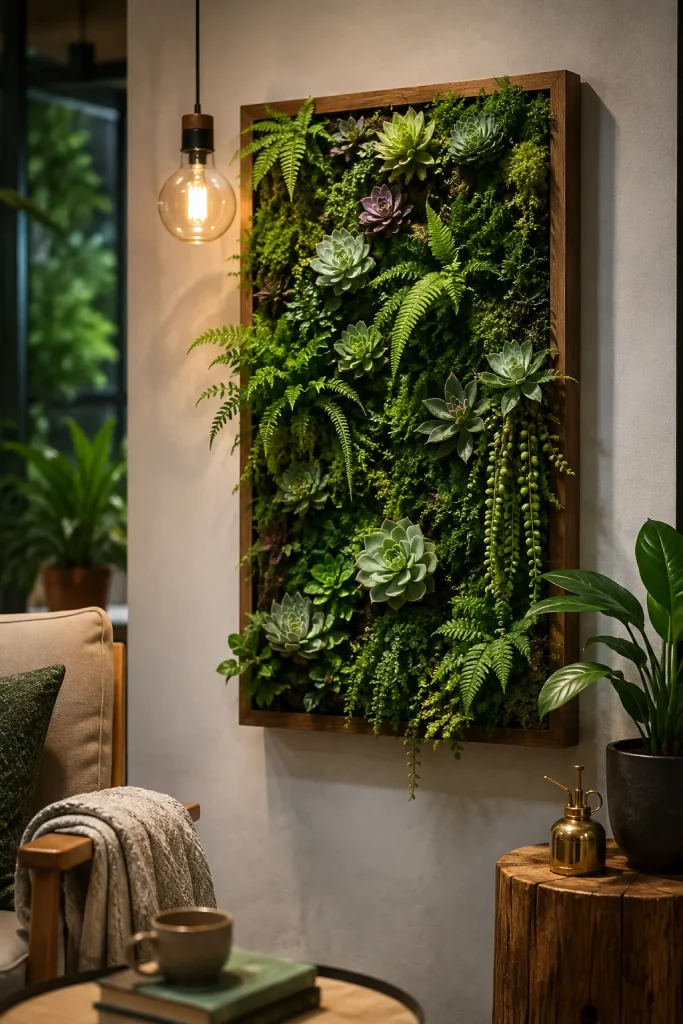
A living wall frame is a structured planter system that holds soil and plants vertically inside a shallow frame, usually made of wood, metal, or felt pockets. It hangs flat against a wall, much like a piece of art, and can be filled with succulents, ferns, or trailing greenery. This idea is popular for both indoor and outdoor spaces because it looks polished and intentional.
Unlike loose-hanging pots, a living wall frame keeps everything contained and even, giving it a clean, designer feel. It works well as a statement piece behind a dining table, on a covered patio, or as an entryway accent. Because the plants sit close together, the wall fills in quickly and looks lush within a season.
Maintenance is usually simple since most frames include a built-in irrigation layer or reservoir. You water it much like a large hanging planter, and gravity handles the rest. A living wall frame is a great choice if you want your vertical garden to double as home decor.
7. Trellis with Climbing Vines
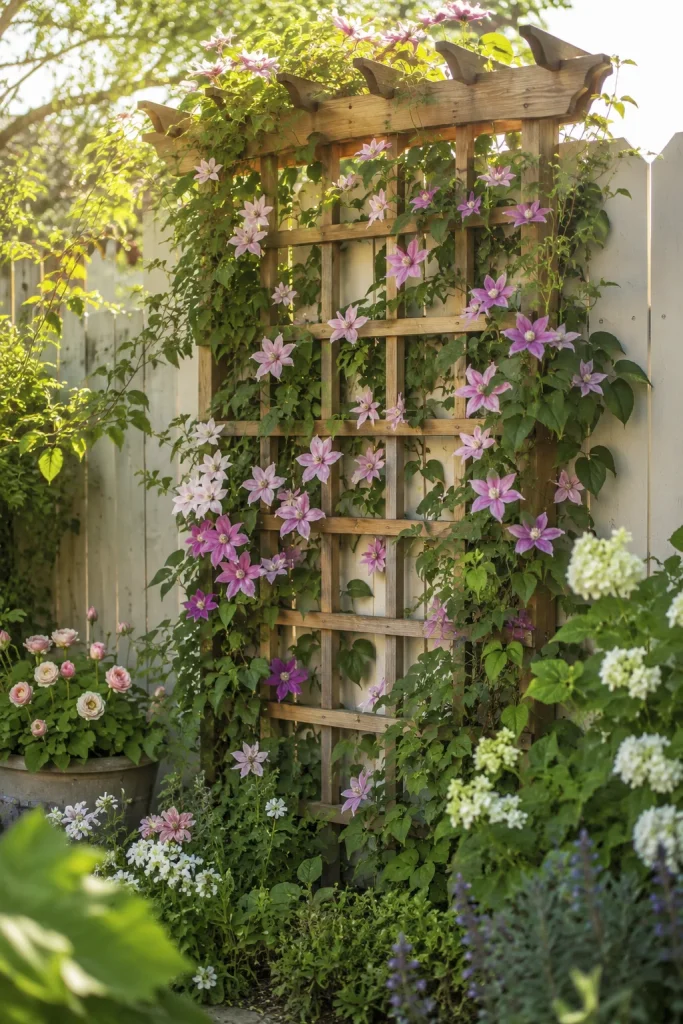
A simple trellis is one of the oldest vertical garden ideas, and it still works beautifully today. Climbing plants like clematis, morning glory, jasmine, or pole beans naturally grow upward when given a structure to hold onto. You can install a trellis against a fence, wall, or freestanding frame in almost any garden style.
This method is especially good for gardeners who want privacy along with greenery, since a well-covered trellis can screen a view or block wind. It also uses very little ground space compared to sprawling plants because it grows vertically rather than spreading outward. Over a season or two, the trellis becomes covered in leaves and flowers, creating a soft green wall.
Beyond flowers, trellises work well for vegetables like cucumbers, peas, and small squash varieties. Training these plants upward keeps the fruit cleaner and easier to harvest. A trellis is a low-cost, high-reward addition to almost any vertical garden plan.
8. Stacked Terracotta Pot Tower
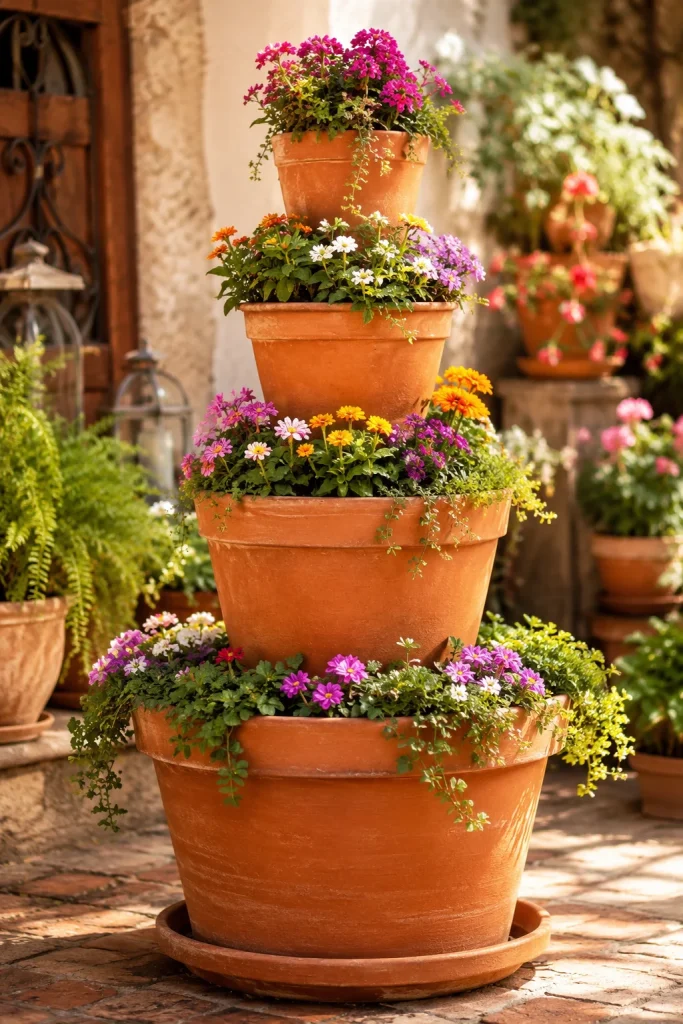
Stacking terracotta pots of different sizes on top of each other creates a simple, budget-friendly vertical garden tower. You thread a metal rod or sturdy dowel through the drainage holes to keep the pots aligned and stable, then fill each pot with soil and plants. The result looks like a small blooming pyramid.
This idea is popular because it uses materials most gardeners already have on hand, and it adds height without needing a wall or fence. Strawberries, herbs, and trailing flowers all work well in a stacked pot tower since their leaves cascade nicely over the edges. It also makes a charming centrepiece for a patio or garden entrance.
Because each pot is a separate planting zone, you can experiment with different plant combinations each season. The earthy terracotta colour gives the display a warm, classic garden feel that suits many outdoor styles. It is an easy weekend project that delivers a big visual impact.
9. Macrame Hanging Planters

Macrame hanging planters bring a soft, boho touch to vertical gardening while making smart use of ceiling and wall space. Instead of placing pots on the floor or a shelf, you suspend them at different heights using knotted cord. Trailing plants like pothos, string of pearls, or spider plants look especially striking as they cascade down from the hanger.
This idea works well both indoors near a sunny window and outdoors on a covered porch. Because the planters hang in the air, they free up valuable floor and counter space, which is ideal for small apartments. Grouping a few macrame planters at varying lengths also adds a layered, textured look to any room.
Beyond the practical space-saving benefit, macrame hangers add a warm, handmade texture that pairs well with natural wood and neutral decor. They are simple to make yourself with basic knotting techniques, or you can buy them ready-made. Either way, they turn ordinary houseplants into a stylish vertical display.
10. PVC Pipe Vertical Garden
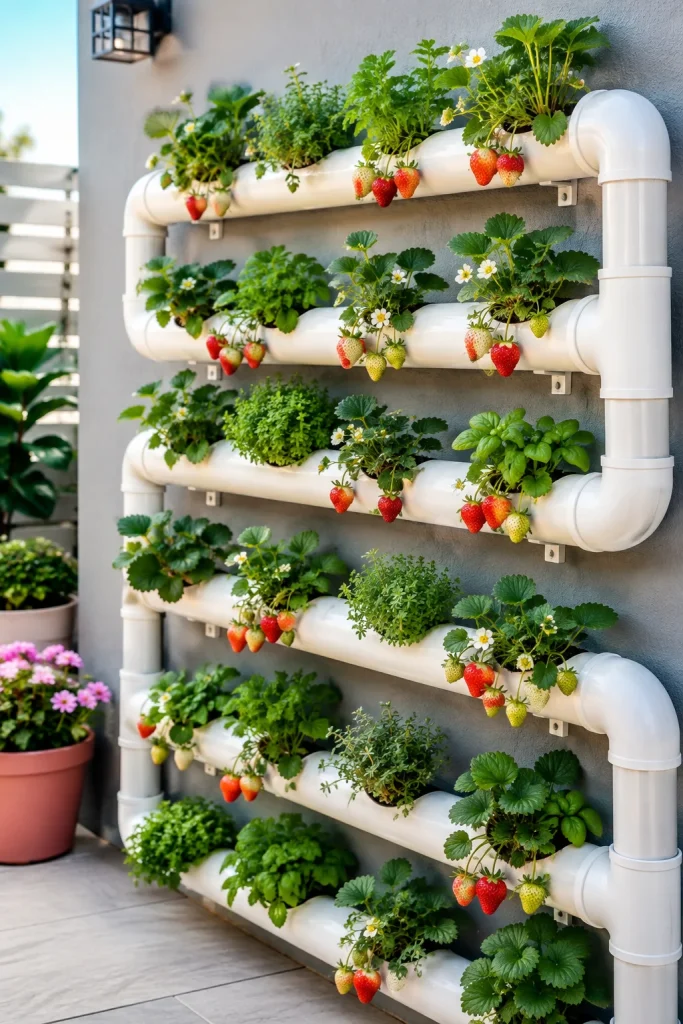
A vertical garden made of PVC pipes is a clever way to grow many plants with very little material. You cut holes into a length of PVC pipe, seal the ends, and mount it horizontally or vertically on a wall or stand. Each hole becomes a small planting pocket for strawberries, lettuce, or herbs.
This method is popular with gardeners who want a durable, weatherproof option that will not rot or break down like wood or fabric. Because PVC is lightweight, you can hang several pipes in a row to create a full wall of plants without adding much weight to your structure. It is also easy to paint the pipes to match your outdoor colour scheme.
Watering can be done from the top of the pipe, letting moisture flow down to each pocket below, or you can add a simple drip system for convenience. This setup is especially useful for growing strawberries, since it keeps the fruit off the ground and away from pests. It is a practical, long-lasting option for anyone who wants a tidy, modern vertical garden.
11. Tiered Plant Stand
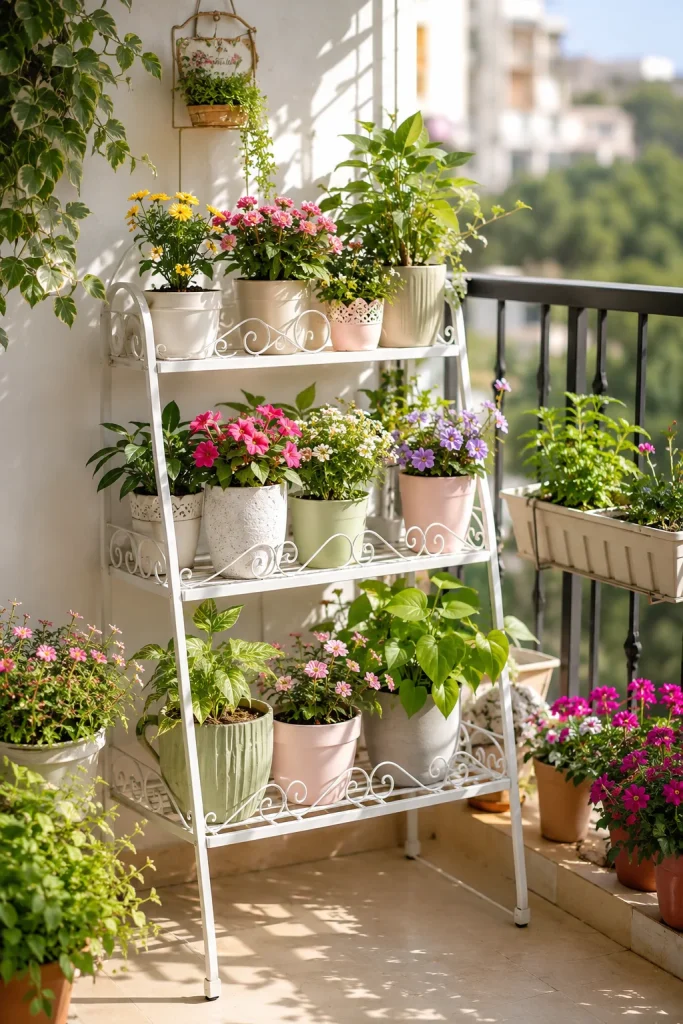
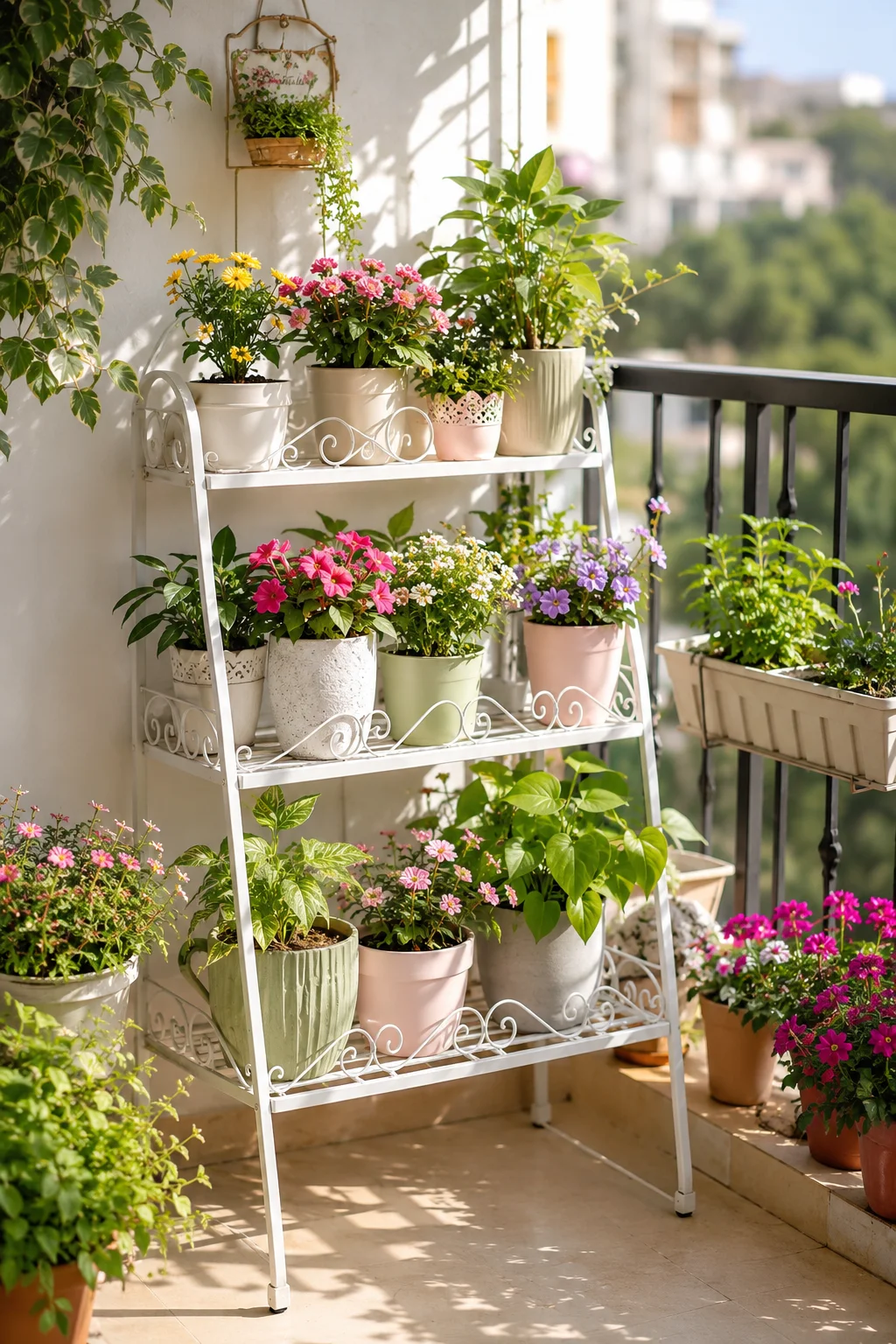
A tiered plant stand is one of the simplest ways to grow more plants without needing a wall or fence at all. These stands usually have three or four shelves that rise, letting you display multiple pots within the footprint of just one. They come in metal, wood, or plastic so you can match almost any indoor or outdoor style.
This idea is especially useful for balconies and patios where floor space is tight but vertical space is open. Placing taller plants on top and shorter ones below helps every plant get enough light. It also makes watering and checking on your plants easier since everything is at a comfortable height.
Because tiered stands are freestanding, you can move them around to catch the best sun throughout the day or season. They work well for succulents, herbs, and flowering annuals alike. A single stand can instantly make a small space feel fuller and greener.
12. Wall-Mounted Planter Boxes
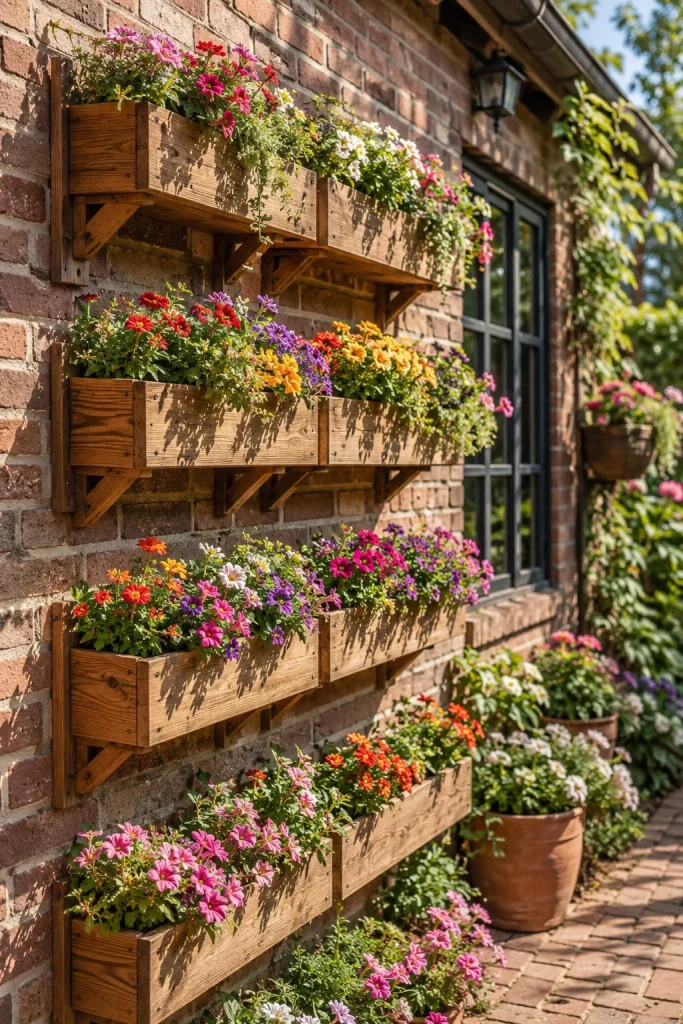
Wall-mounted planter boxes are a classic vertical garden idea that adds instant charm to any exterior wall, fence, or balcony railing. Unlike hanging planters, these boxes attach securely with brackets, giving you a sturdy base for larger plants and deeper soil. This makes them a great choice for flowers, small vegetables, or even dwarf shrubs.
Because the boxes mount directly to a flat surface, they work well in spaces where floor room is limited, but wall space is open, such as narrow balconies or side yards. You can arrange several boxes in a row for a uniform, tidy look, or stagger them at different heights for more visual interest. Either way, they turn a plain wall into a colourful garden feature.
These boxes are also easy to maintain since they usually include built-in drainage holes and trays to catch excess water. Many gardeners paint or stain them to match their home’s exterior for a cohesive look. It is a reliable, attractive option for anyone wanting a more permanent vertical garden.
13. Vertical Succulent Frame

A vertical succulent frame is a low-maintenance option for gardeners who want greenery without much upkeep. You fill a shallow wooden or metal frame with a wire mesh backing, pack it with well-draining soil, and tuck small succulent cuttings into the mesh. Over a few weeks, the roots take hold, and the succulents fill in, creating a dense, tapestry-like design.
This idea is perfect for sunny walls, since succulents thrive on heat and need very little water compared to other plants. It also works well in dry climates or for gardeners who tend to forget to water regularly. The compact growth habit of succulents means the frame retains its neat shape for a long time with minimal trimming.
Because succulents come in so many colours, shapes, and textures, you can arrange them in patterns or gradients for a more artistic look. This makes a succulent frame double as living-wall art. It is an easy, forgiving project for beginners who still want a striking result.
14. Balcony Railing Planters
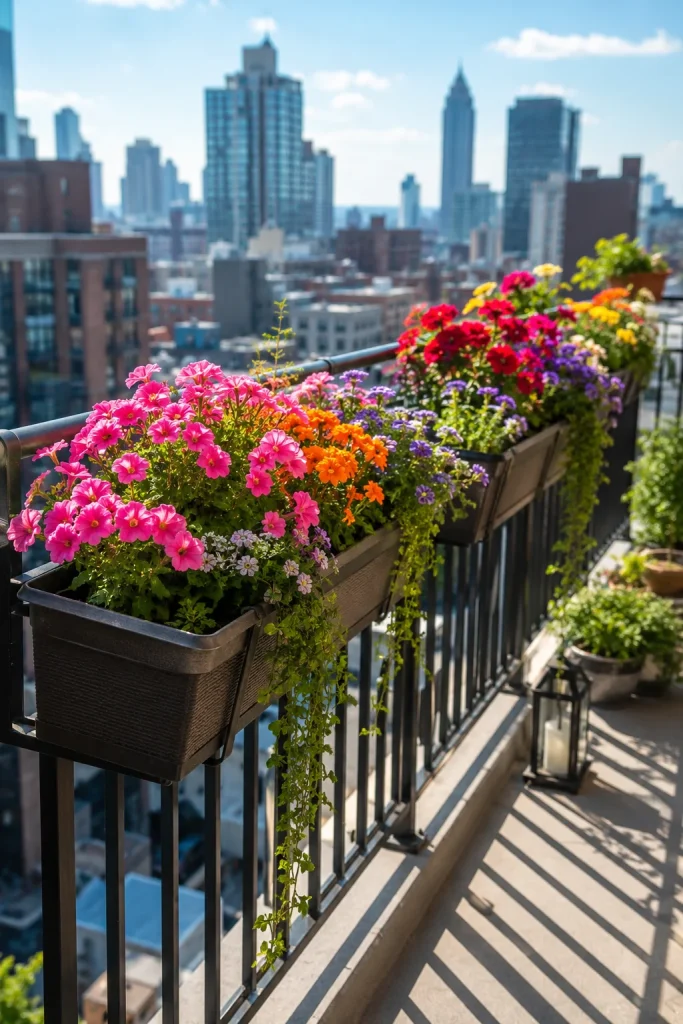
Balcony railing planters are one of the easiest vertical garden ideas for apartment dwellers with little to no ground space. These boxes clip or hook directly onto a railing, using space that would otherwise go unused. They can hold flowers, herbs, or small trailing vegetables, all within easy reach of your balcony door.
Because the planters sit at railing height, they get plenty of sun and are simple to water without bending down. This setup also adds privacy and softens the look of a bare metal or concrete railing, making the balcony feel more like a real garden. Many designs come with adjustable brackets, so they fit railings of different widths and shapes.
For renters, railing planters are ideal since they usually require no drilling or permanent changes to the balcony. You can remove them easily when moving or swap plants with the seasons. It is one of the simplest ways to add a real vertical garden to a small city balcony.
Conclusion
Growing a full, beautiful garden does not require a big yard. With these 14 vertical garden ideas, you can turn walls, fences, railings, and even a corner of your living room into a green, thriving space. Pick one or two ideas that fit your space and style, and you will be surprised how much you can grow when you start looking up instead of out.