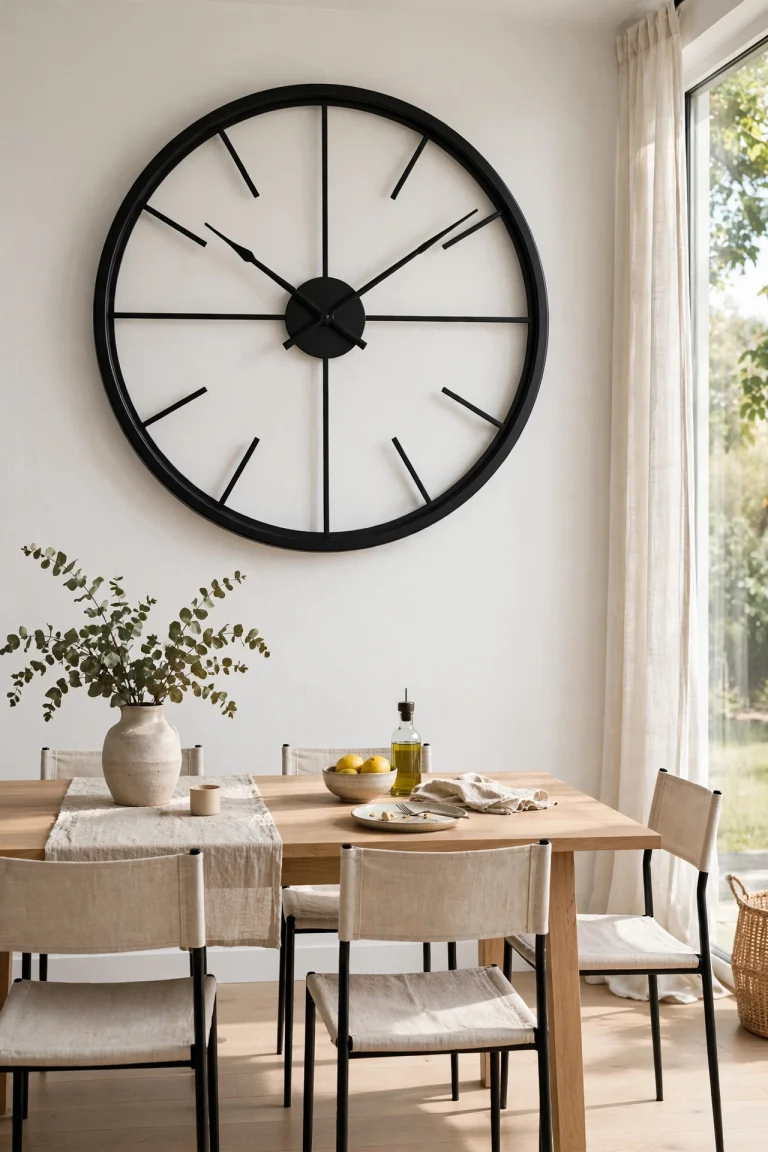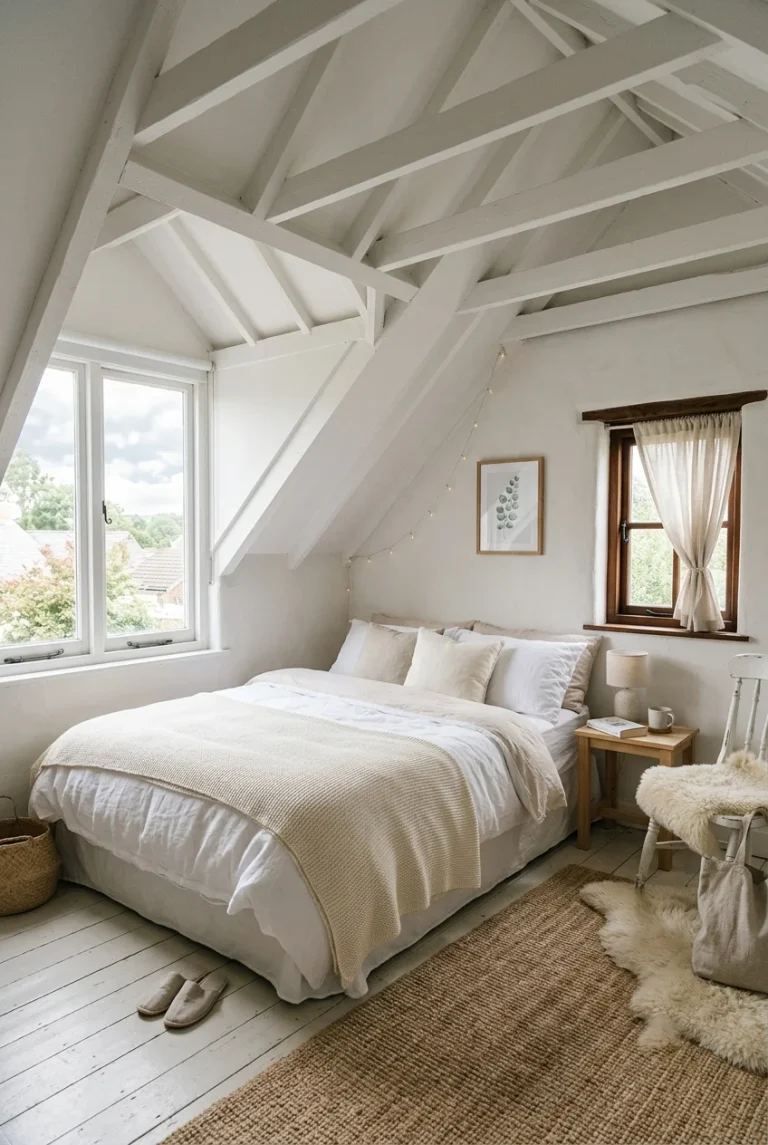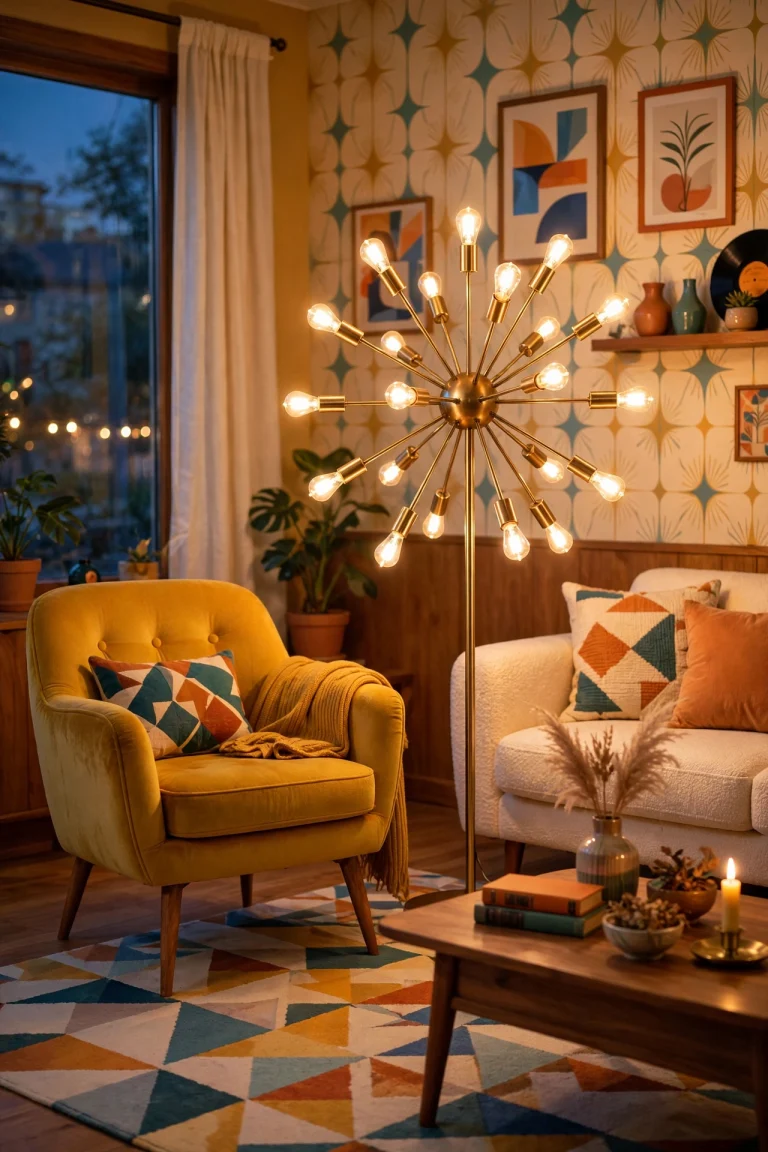
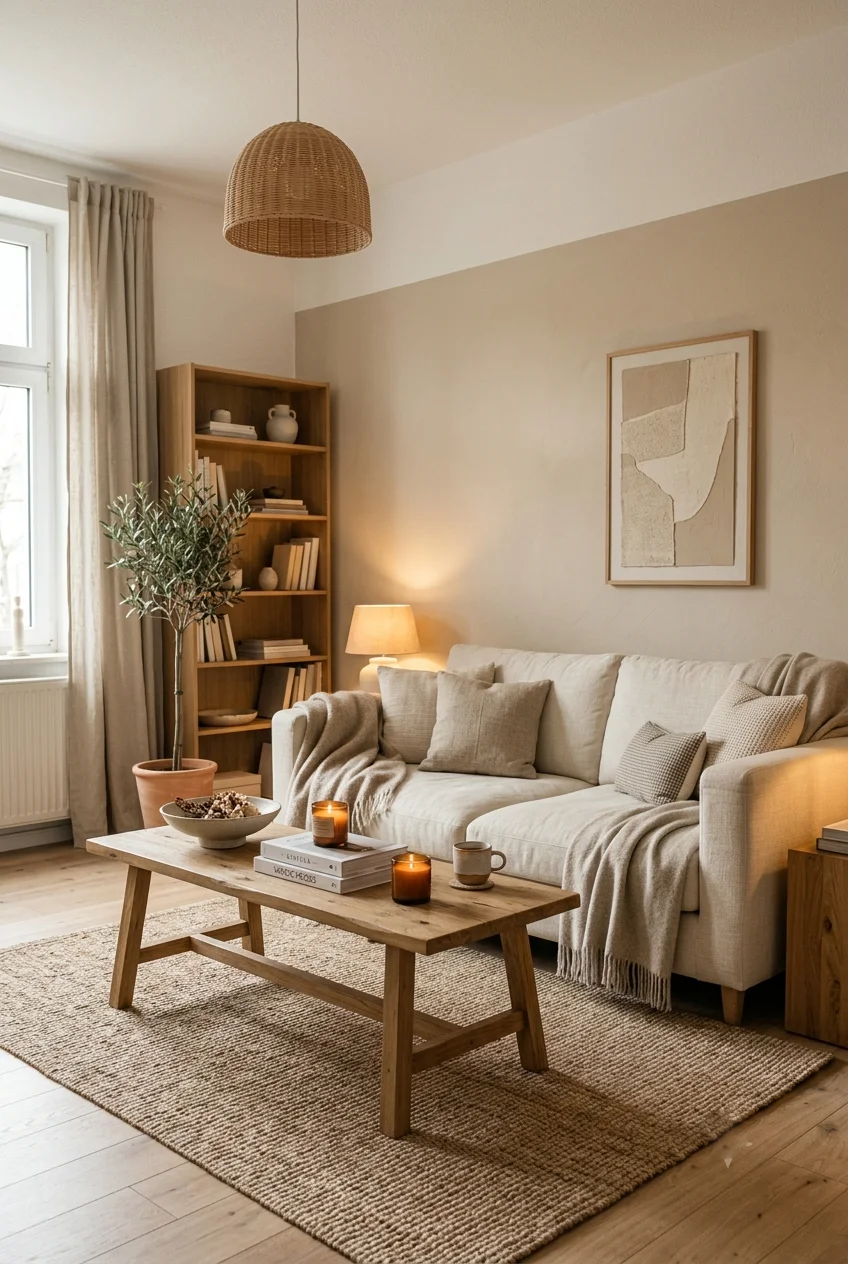
27 Transitional Design Ideas That Blend Classic and Modern Style
Decorating your home feels confusing when you love both classic and modern styles but cannot pick one. Transitional design is the answer it brings both worlds together without making your space look messy or overdone. You do not have to choose between clean lines and cozy traditional details. This style gives you the best of both. It works in any room and fits any budget. If you have been scrolling Pinterest looking for a home that feels warm but still fresh, transitional design is exactly what you need.
Transitional design is not about following strict rules. It is about balance pairing a sleek sofa with a classic wood coffee table, or using neutral walls with layered textures. The goal is a space that feels put together without looking like a showroom. Many people think mixing old and new will look chaotic, but with the right approach, it feels natural and calm.
This style is also very practical for real homes with real budgets. You can keep furniture you already love and add a few modern or classic pieces to shift the feel. Whether you are redesigning one room or your whole house, these 27 ideas will help you build a space that feels both current and timeless.
1. Neutral Color Palette With Warm Undertones
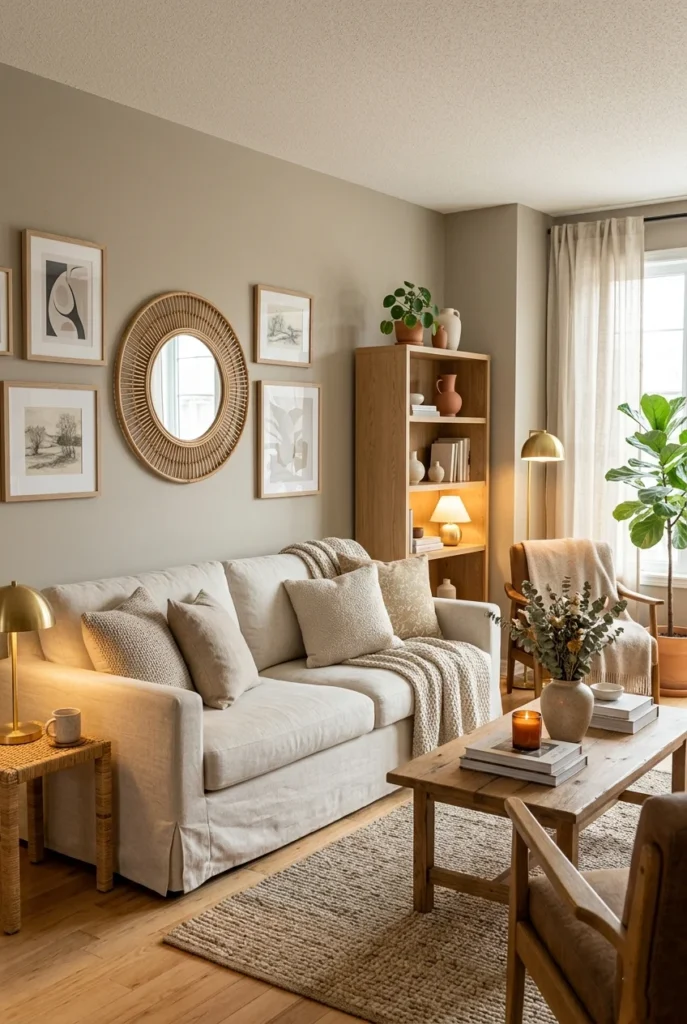
A neutral color palette is the foundation of every great transitional space. Colors like warm white, greige, soft taupe, and creamy beige create a calm backdrop that lets both classic and modern elements shine. These shades are timeless and never go out of style. They also make rooms feel bigger and more open without feeling cold or sterile.
The trick with neutrals is to add warmth through undertones. Instead of a stark cool gray, choose a gray with a beige or brown undertone. This small shift makes the space feel inviting rather than office-like. Pair those walls with linen curtains in a similar tone, and your room already feels layered and put together.
Do not be afraid of using different shades of the same neutral in one room. A cream sofa against a warm white wall next to a light taupe rug creates depth without visual noise. This tonal approach is a hallmark of transitional design — quiet, cohesive, and always elegant.
2. Mixing Wood Tones Throughout the Space
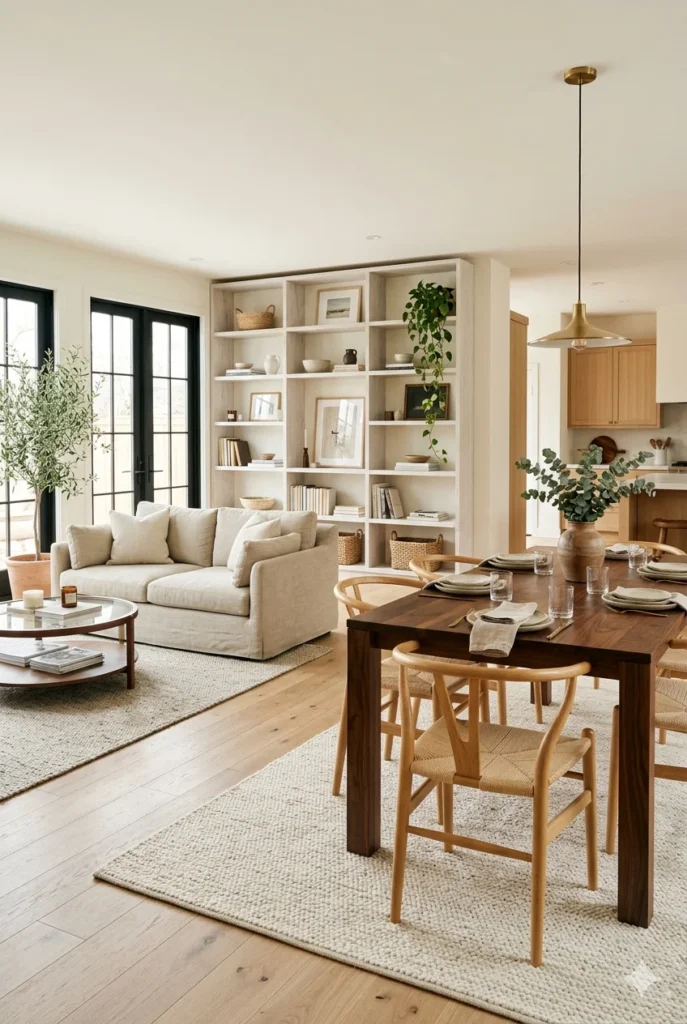
One of the biggest myths in home design is that all your wood tones must match. Transitional design breaks that rule beautifully. Mixing wood tones like pairing a dark walnut table with lighter oak floors adds visual interest and makes a space feel collected over time rather than bought all at once. It also feels more natural and lived-in.
The key to mixing wood tones successfully is to anchor the space with one dominant tone and let the others act as accents. If your floors are light oak, a darker wood coffee table or side table adds contrast without clashing. Keeping a similar undertone across your wood pieces — all warm or all cool — ties everything together.
This approach works especially well in transitional spaces because it nods to classic, furniture-forward design while keeping things relaxed and modern. Wood is a natural material that adds warmth to even the sleekest, most minimal room. Use it generously and mix it freely.
3. Classic Crown Molding With a Modern Interior
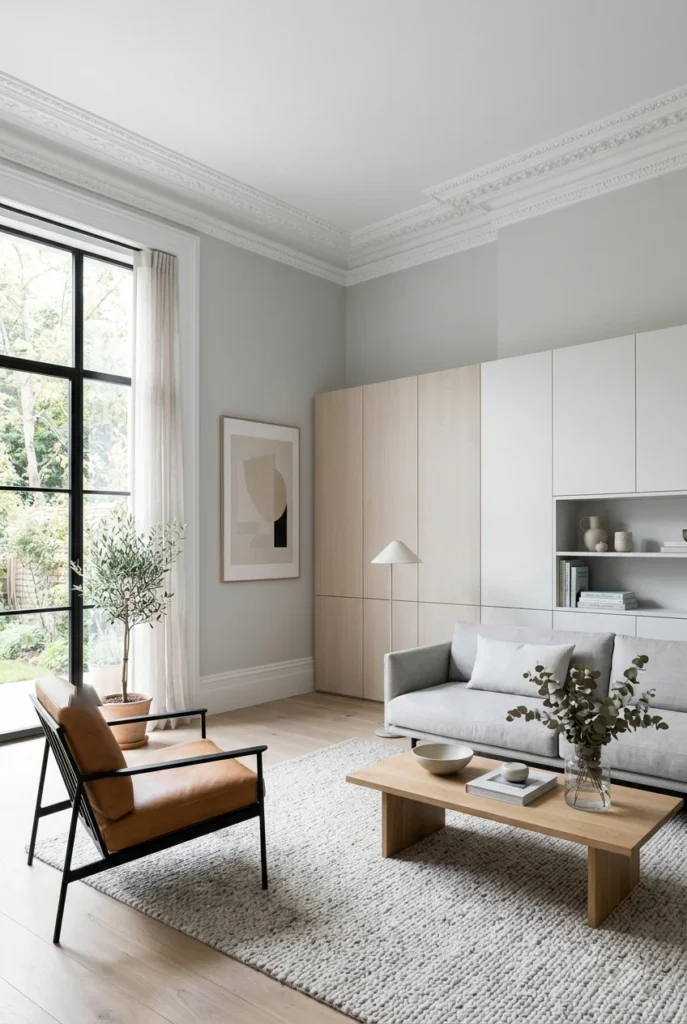
Crown molding is one of the easiest ways to bring classic architecture into a modern home. It adds a sense of craftsmanship and detail that makes any room feel more finished and elevated. Even a simple, clean-profile molding makes a huge difference on an otherwise plain wall. It is a small detail with a big visual impact.
In a transitional space, keep the molding profile fairly simple. Avoid very ornate, layered Victorian-style molding — instead, choose a clean cove or stepped profile that reads as classic but does not feel heavy. Painted the same color as the ceiling, it blends in and adds subtle architectural interest without dominating the room.
Crown molding pairs beautifully with flat-front modern cabinetry or minimal furniture. The contrast between the ornate ceiling detail and the clean lines below creates exactly the kind of tension that makes transitional design so visually compelling. It tells the story of old and new living comfortably side by side.
4. Upholstered Headboards With Streamlined Frames
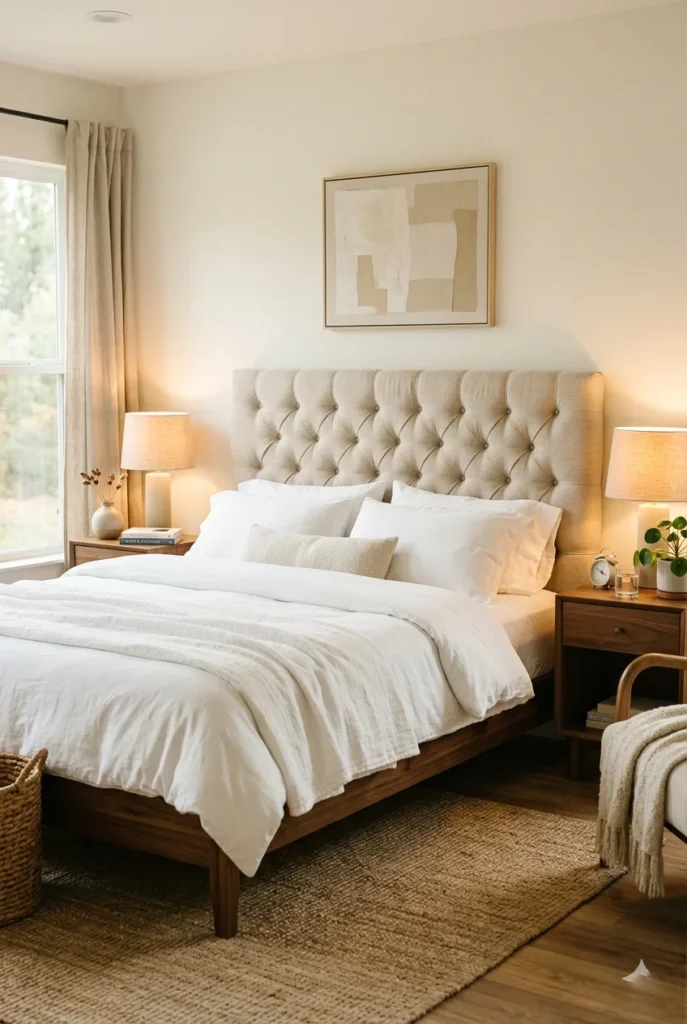
An upholstered headboard is one of the most versatile pieces you can put in a bedroom. It brings softness, texture, and a classic touch to the room while keeping the space from feeling too cold or minimal. In transitional design, a tufted or paneled headboard in a neutral fabric, such as linen, boucle, or velvet, works perfectly. It is traditional in feel but clean enough to suit a modern frame.
The bed frame itself should stay streamlined. A simple wood or metal frame with clean lines keeps the overall look balanced. Avoid frames with too much carved detail or heavy footboards — those push the style too far into traditional territory. The combination of a soft upholstered headboard and a sleek frame hits the sweet spot of transitional style.
Bedding keeps this look grounded. Stick to white or off-white linens with minimal pattern, and layer with a woven throw or textured blanket at the foot of the bed. This combination feels hotel-quality but also warm and personal — exactly the mood transitional bedrooms are meant to create.
5. Statement Lighting With Mixed Materials
Lighting is one of the fastest ways to shift a room’s feel in transitional design. A well-chosen pendant, chandelier, or sconce can effortlessly bridge classic and modern. Look for fixtures that combine materials — like a brass frame with a linen shade, or a geometric metal chandelier with candle-style bulbs. These mixed-material pieces feel fresh but not trendy.
Drum pendants and linear chandeliers are particularly popular in transitional spaces. They have enough visual weight to feel classic and substantial, but their cleaner forms keep them modern. Aged brass, brushed nickel, and matte black are the best finishes for transitional fixtures — they add warmth and character without being too ornate or too industrial.
Do not underestimate the power of layered lighting. A transitional room works best with ambient overhead light, task lighting, and accent lighting all working together. This approach — borrowed from classic interior design — creates depth and mood that a single overhead fixture never can. Layered lighting makes every room feel more intentional and more beautiful.
6. Open Shelving With Curated Classic Accessories
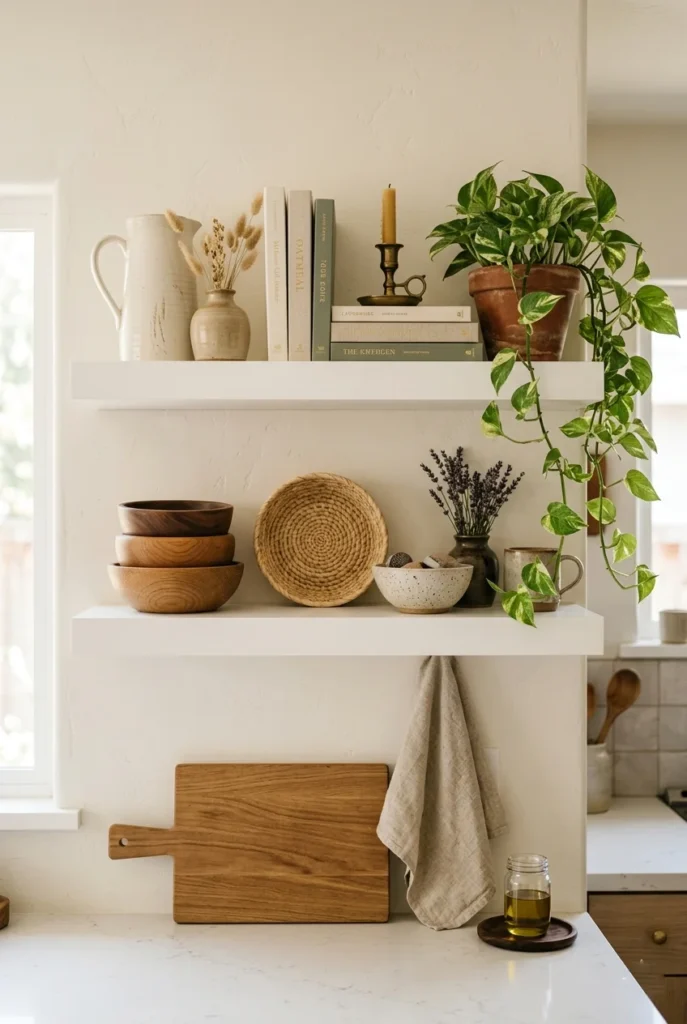
Open shelving is a modern design move, but what you put on those shelves determines whether the space reads as transitional or just trendy. In a transitional home, the goal is curated—not cluttered or too spare. Mix classic objects like ceramic vases, leather-bound books, and wooden bowls with more contemporary pieces like geometric sculptures or simple glassware.
The key is grouping. Arrange objects in groups of odd numbers, and vary the height within each group. A tall vase, a low stack of books, and a small sculptural object create a visual rhythm that feels intentional and styled. Leave some empty space between groupings — breathing room is part of what makes open shelving look elegant rather than chaotic.
In kitchens especially, open shelving with a mix of everyday dishes and a few beautiful objects blends the practical and the decorative in a very transitional way. Stack your everyday white plates next to a pretty ceramic jug and a trailing plant. It looks effortless, but it is a deliberate balance of the functional and the beautiful.
7. Shiplap or Board-and-Batten Walls in Neutral Tones
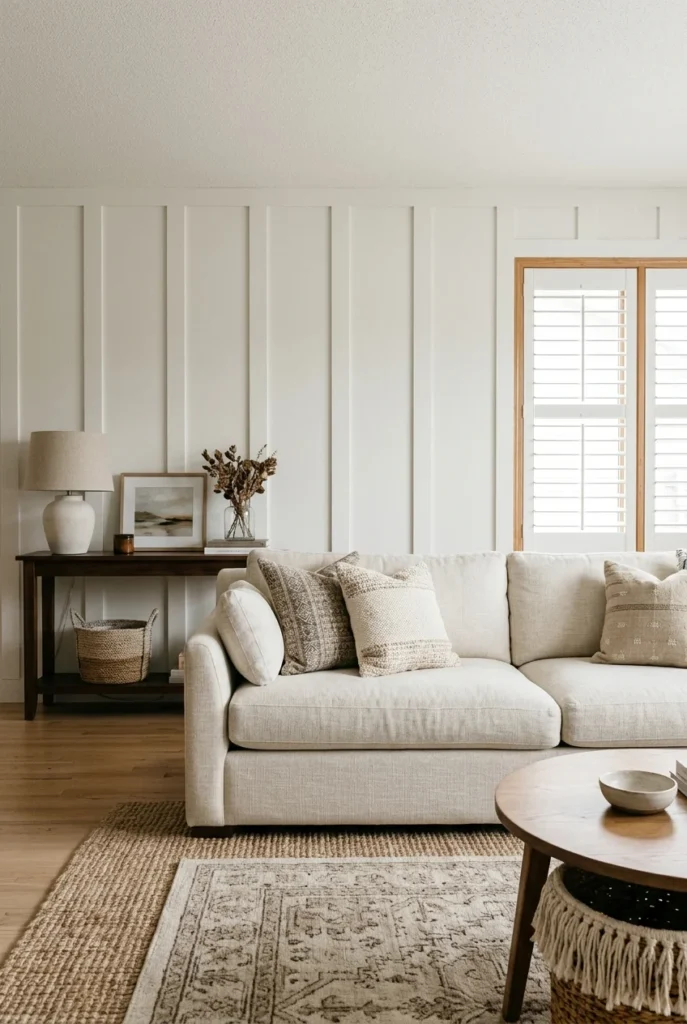
Shiplap and board-and-batten walls add architectural texture that sits perfectly between classic and modern. They are rooted in traditional American farmhouse and cottage design, but when painted in a clean neutral — white, soft gray, or warm greige — they feel very current. The texture they add to a wall is subtle but impactful, making the whole room feel more designed.
Board-and-batten works particularly well in entryways, dining rooms, and bedrooms. The vertical lines draw the eye upward and make ceilings feel higher. In a transitional space, keep the color consistent with the rest of the room’s palette — painting it the same color as the wall above gives a seamless, high-end look that feels architectural rather than decorative.
This wall treatment also gives you a lot of flexibility in styling. Against board-and-batten, both a traditional gilded mirror and a modern abstract print will look great. That adaptability is what makes it such a perfect choice for transitional design. It sets the stage without dictating the story.
8. Marble and Wood Combined in the Same Room
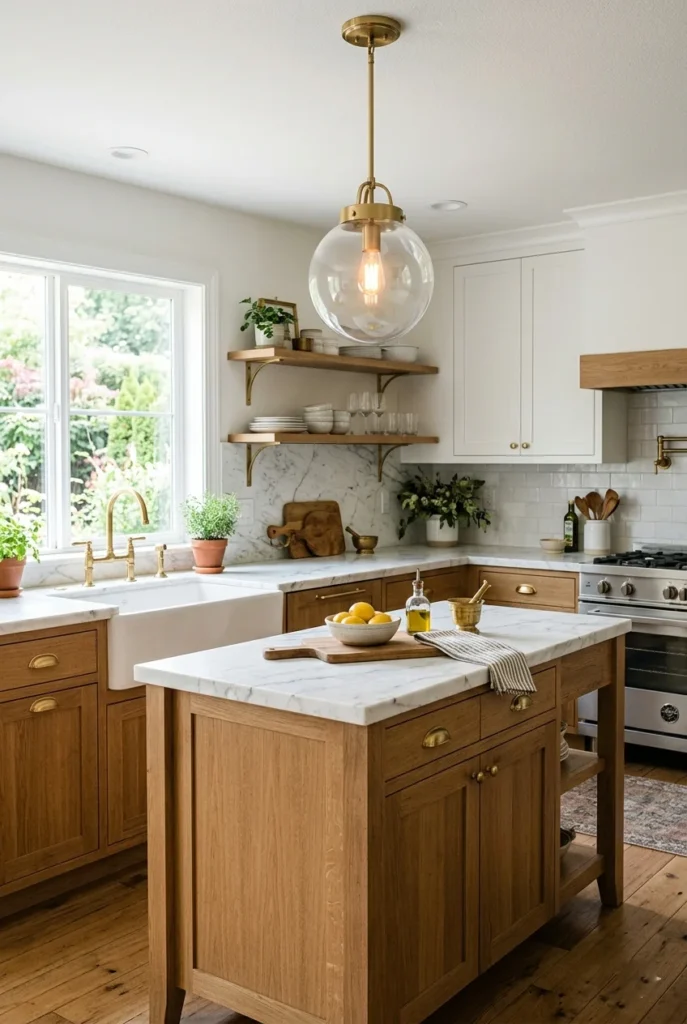
Marble is one of the most classically beautiful materials in interior design, and pairing it with natural wood creates a combination that is both timeless and warmly modern. The cool elegance of marble balances the organic warmth of wood perfectly. This pairing appears frequently in transitional kitchens and bathrooms but works just as well in living rooms and dining spaces.
White Carrara or Calacatta marble with warm walnut or white oak wood is a particularly effective combination. The veining in the marble adds movement and visual interest, while the wood brings grounding warmth. Together, they prevent either material from feeling too cold or too rustic. It is a naturally balanced pairing that never goes out of style.
If real marble is outside your budget, high-quality marble-look porcelain tile or quartz gets you the same effect for less. The principle is the same — pair a stone surface with a wood element nearby, whether that is a shelf, a stool, a floor, or a cabinet. The two materials do the work of transitional design simply by being next to each other.
9. Classic Wainscoting in a Modern Color
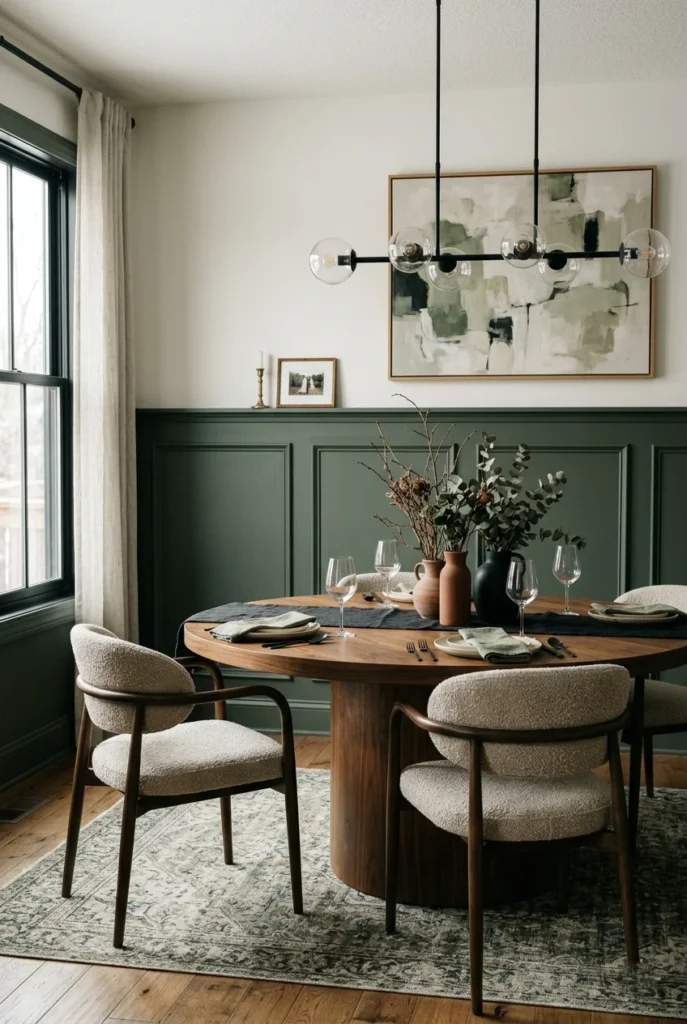
Wainscoting is one of the oldest architectural wall treatments in Western home design. In a traditional home, it tends to come in bright white with ornate detailing. In a transitional space, you take that classic structure and update it with color — think deep navy, dusty sage, warm charcoal, or terracotta. The form is classic; the color makes it current.
The height of the wainscoting matters for the overall feel. A chair-rail height of around 36 inches reads as very traditional. Taking it up to 48 or even 60 inches creates a more dramatic, modern panel effect that feels more current. Painting both the wainscoting and the baseboard the same color gives a seamless, intentional look. Above the wainscoting, keep the wall in a soft neutral or complementary lighter shade.
Wainscoting in a bold color transforms a dining room or hallway almost instantly. Pair it with a simple wood table and modern chairs for a space that respects classic design but lives very much in the present. It is one of those design decisions that looks expensive but is actually one of the most budget-friendly ways to transform a room.
10. Layered Rugs for Texture and Depth
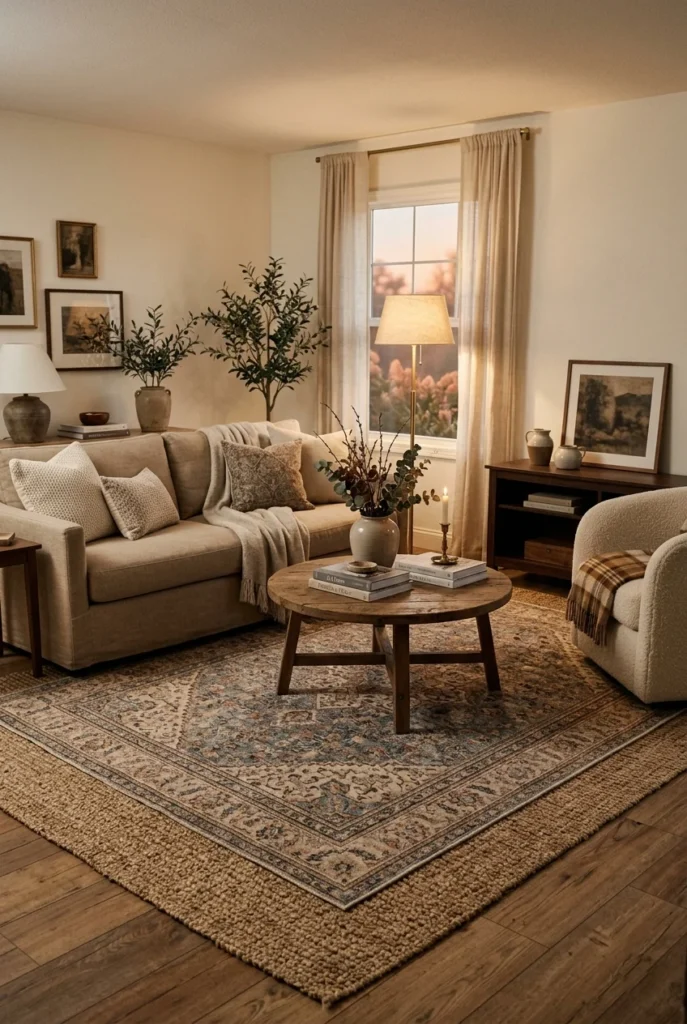
Layering rugs is a technique that comes straight from classic, collected interior design — the kind of rooms that look like they have been built up over decades. In a transitional space, it adds warmth, texture, and depth that a single rug rarely achieves. Start with a flat-weave or natural-fiber rug, like jute, as your base layer, then add a softer or more patterned rug on top.
The top rug is where you can bring in a little personality — a vintage-style Persian rug, a simple geometric pattern, or a soft solid in a warm tone. The base rug grounds the space while the top rug adds character. Sizing matters here — the base rug should be large enough to anchor the entire seating area, while the top rug sits more centered under the coffee table.
This technique also makes practical sense in real homes. You can protect a more expensive rug with a natural-fiber layer beneath and swap out the top rug seasonally. In winter, use a thick wool or shearling rug for warmth. In summer, pull it back and let the lighter base rug breathe. Transitional design is always as practical as it is beautiful.
11. Linen and Velvet Together on Upholstery
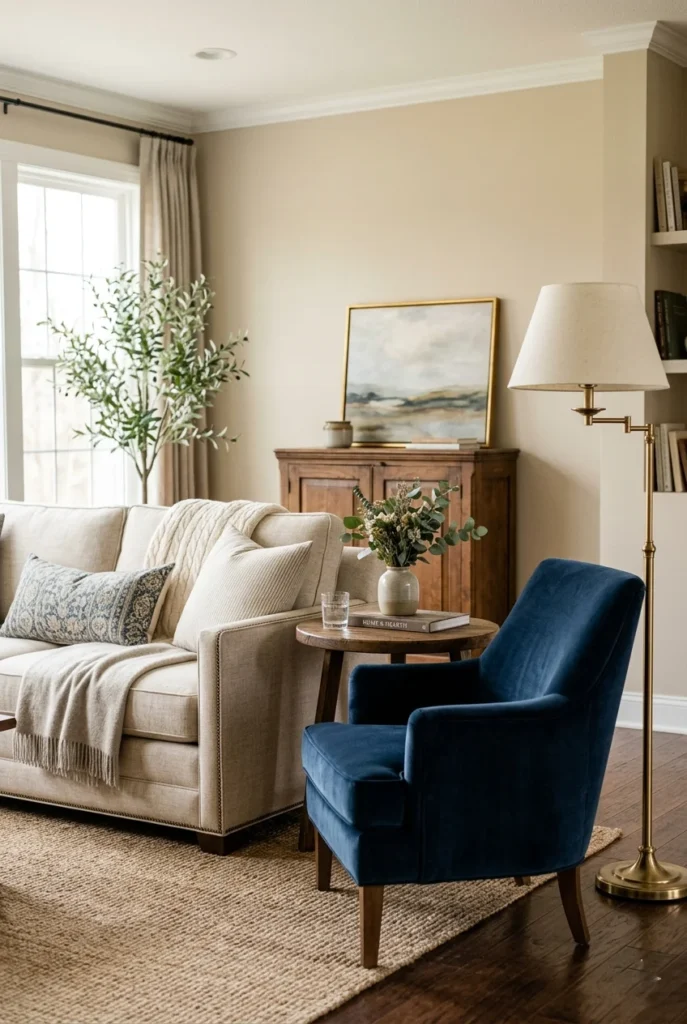
Mixing fabric textures on your upholstery is one of the most effective styling tools in transitional design. Linen is casual, breathable, and naturally relaxed — it has a slightly undone quality that keeps spaces from feeling too formal. Velvet is rich, lustrous, and deeply connected to classic, traditional interiors. Putting them in the same room creates exactly the kind of elegant yet livable tension that defines transitional style.
A linen sofa paired with a velvet accent chair is perhaps the most classic expression of this combination. Keep the linen in a neutral like cream, warm white, or soft gray. The velvet chair can hold more color — deep teal, forest green, dusty rose, or warm camel all work beautifully. The linen does the quiet work of keeping the room calm while the velvet adds depth and richness.
This fabric pairing also photographs incredibly well, which is why it is so popular on Pinterest. Both materials catch light differently — the linen is matte and soft, the velvet shifts with the light from dark to bright. Together in a room, they create a visual richness that feels very intentional. You do not need many pieces — just one or two fabric contrasts can completely transform the feel of a space.
12. Traditional Fireplace With a Minimalist Surround
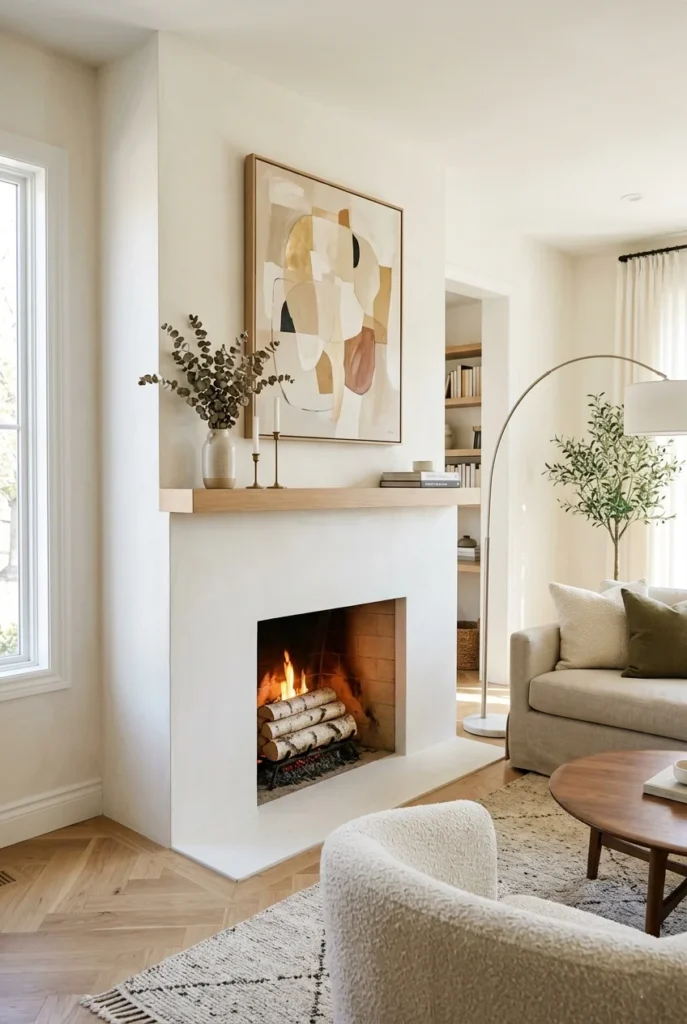
A fireplace is one of the most classically beautiful architectural features a home can have, and in transitional design, it becomes the perfect anchor for the whole room. The key is treating the surroundings in a way that feels updated rather than period-accurate. A clean, simple plaster or painted wood surround with minimal detailing reads as classic in structure but modern in execution.
The mantel above the fireplace is where transitional styling really comes to life. Instead of the typical collection of matching candlesticks and framed family photos, try a single large piece of abstract or landscape art, a simple mirror, or an asymmetrical arrangement of objects at different heights. The fireplace provides the classic anchor, and the mantel styling keeps it fresh.
Materials also play a big role here. A marble surround with very simple profiling hits the transitional mark perfectly — it is luxurious and classic but clean enough to feel current. A whitewashed brick fireplace with a flat painted mantel does the same thing. The goal is to honor the fireplace’s classic form while keeping every decorative decision clean and intentional.
13. Built-In Bookshelves With Modern Styling
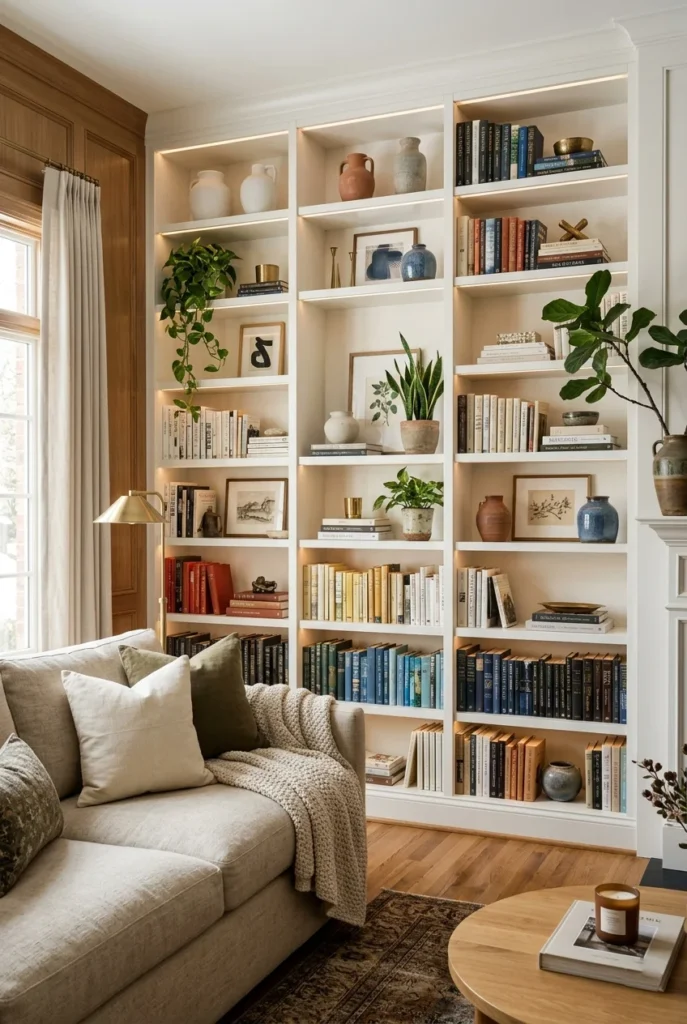
Built-in bookshelves are deeply traditional — they belong to the world of wood-paneled studies and library rooms. But when painted white or in a soft neutral and styled with a modern eye, they become one of the most versatile design features in a transitional home. They add architecture, storage, and display space all in one. They also make a room feel custom-built and intentional in a way that freestanding furniture rarely does.
The styling of built-in shelves is what shifts them from traditional to transitional. Mix books spine-out and face-out, add a few sculptural objects, include some trailing plants, and leave white space throughout. Do not fill every inch — breathing room is what keeps the shelves from looking heavy or old-fashioned. A few larger objects mixed with books at different scales create the right rhythm.
Lighting inside built-in shelves is a small change that makes a huge difference. Simple LED puck lights or integrated strip lighting under each shelf turns the bookshelves into a glowing architectural feature at night. It is a very modern move applied to a very classic structure — which is exactly the spirit of transitional design at its best.
14. Classic Wingback Chair in a Modern Fabric
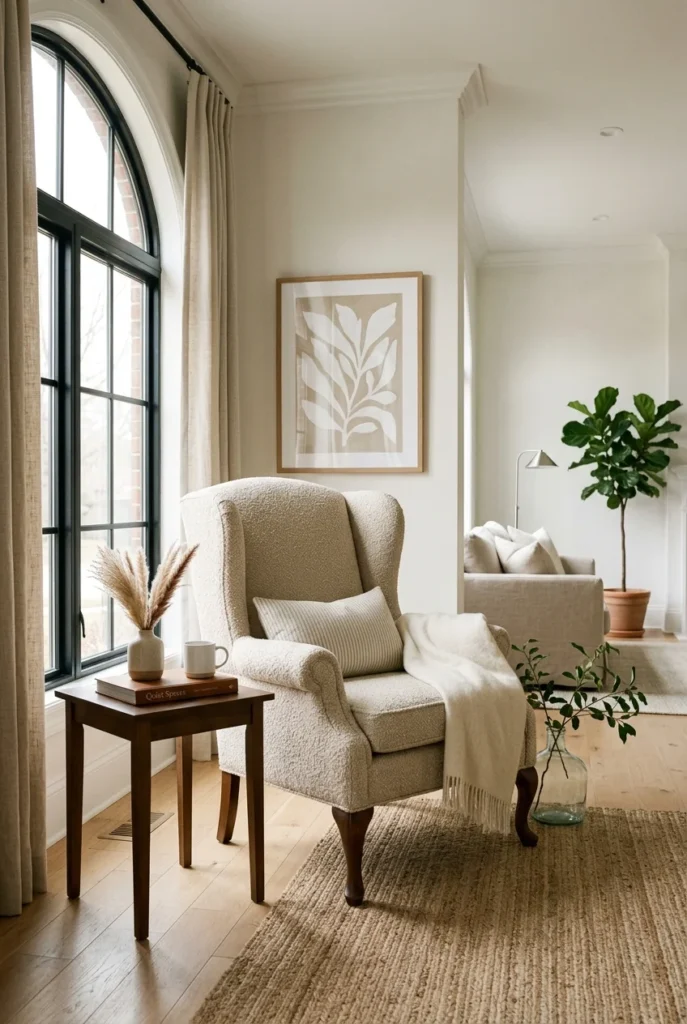
The wingback chair is one of the most recognizable silhouettes in classic furniture design. Its high back, winged sides, and generous proportions come straight out of eighteenth-century English drawing rooms. But reupholstered in a modern fabric — boucle, performance linen, a textured solid — it becomes one of the most versatile and compelling pieces in a transitional space.
The shape of the wingback does all the classic work, so the fabric can be as current as you like. Oatmeal boucle, ivory linen, soft rust velvet, or even a subtle stripe all look incredible on this silhouette. Avoid chintz or heavily patterned traditional fabrics if you want the chair to read as transitional rather than antique. The fabric modernizes the form while the form classicizes the fabric.
Place a wingback chair in a corner with a simple brass floor lamp and a small side table, and you have created a reading nook that feels both intimate and very well-designed. This piece works in a living room, a bedroom, an office, or a hallway. Its adaptability is part of why it has endured for centuries and why it remains one of the most repinned furniture silhouettes on Pinterest.
15. Subway Tile With Interesting Grout Color
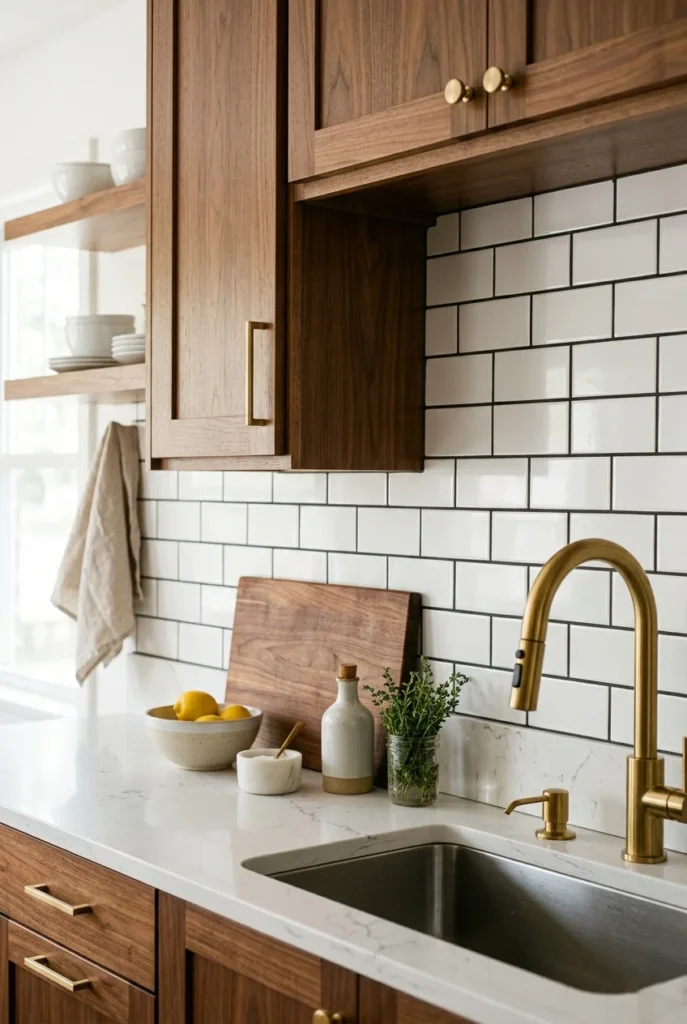
Subway tile is so ubiquitous that it risks feeling generic — but the right grout color completely transforms it. White subway tile with white grout is clean and modern. White subway tile with dark charcoal or black grout becomes graphic and striking while still feeling timeless. That simple shift is a perfect example of transitional design thinking — take a classic material and give it a fresh edge.
The grout color essentially changes the tile pattern. With dark grout on white subway tile, each tile becomes visible as an individual unit, creating a grid that adds structure and visual interest to the wall. With white or light grout, the tiles blend together into a smoother surface. Both work in transitional spaces, but the darker grout tends to read as more current and more intentional.
Beyond kitchens, subway tile with interesting grout works beautifully in bathrooms — especially in shower surrounds and on floors. A floor of white hex tile with charcoal grout is another transitional classic that feels rooted in early twentieth-century design while remaining completely fresh today. These are the kinds of choices that feel timeless precisely because they respect the past without being stuck in it.
16. Antique Mirrors and Modern Art Together
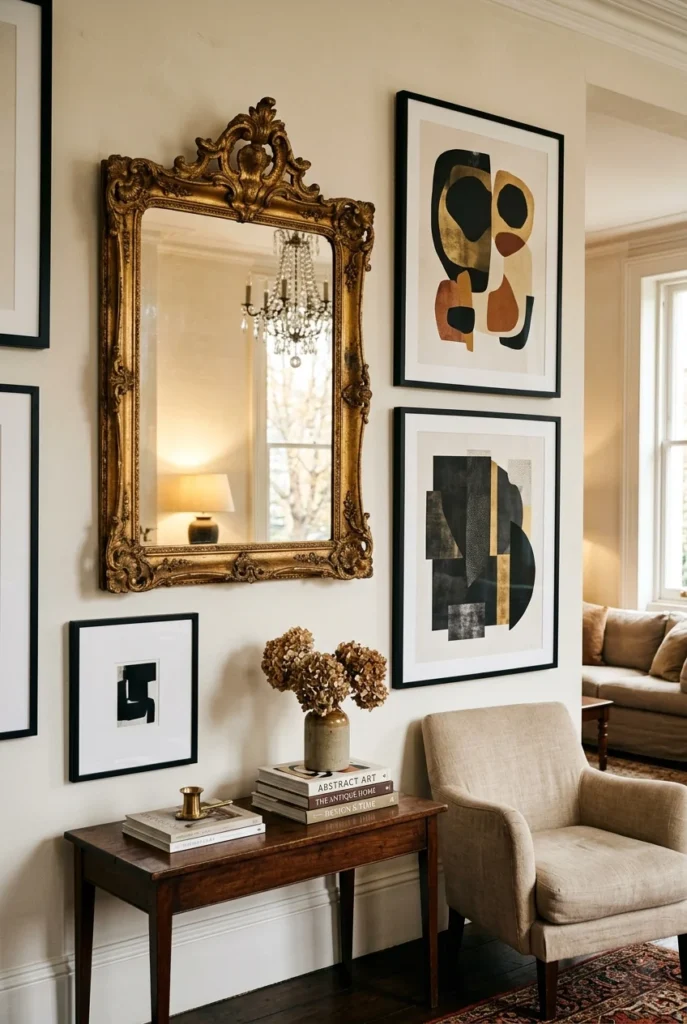
Hanging an antique mirror next to a piece of modern abstract art is one of the most visually interesting things you can do in a transitional space. The ornate gilded frame of the mirror and the clean lines of a contemporary print create a dialogue between past and present that is genuinely captivating. It looks like the room has been collected and loved over time rather than designed all in one go.
The trick is scale — both pieces need to be substantial enough to hold their own on the wall. A small antique mirror next to a large abstract canvas creates the right tension. Or a large mirror flanked by two smaller modern prints. Asymmetry is your friend here. Transitional gallery walls are not about perfect symmetry — they are about visual balance achieved through contrast.
This combination also works on a console table or sideboard. Lean a large, ornate mirror against the wall behind a minimal, modern console table, and the contrast tells a perfect transitional story. Add a simple vase with a few stems and a stack of books, and the whole vignette comes together effortlessly and layered.
17. Coffered Ceilings With Simple, Clean Lines
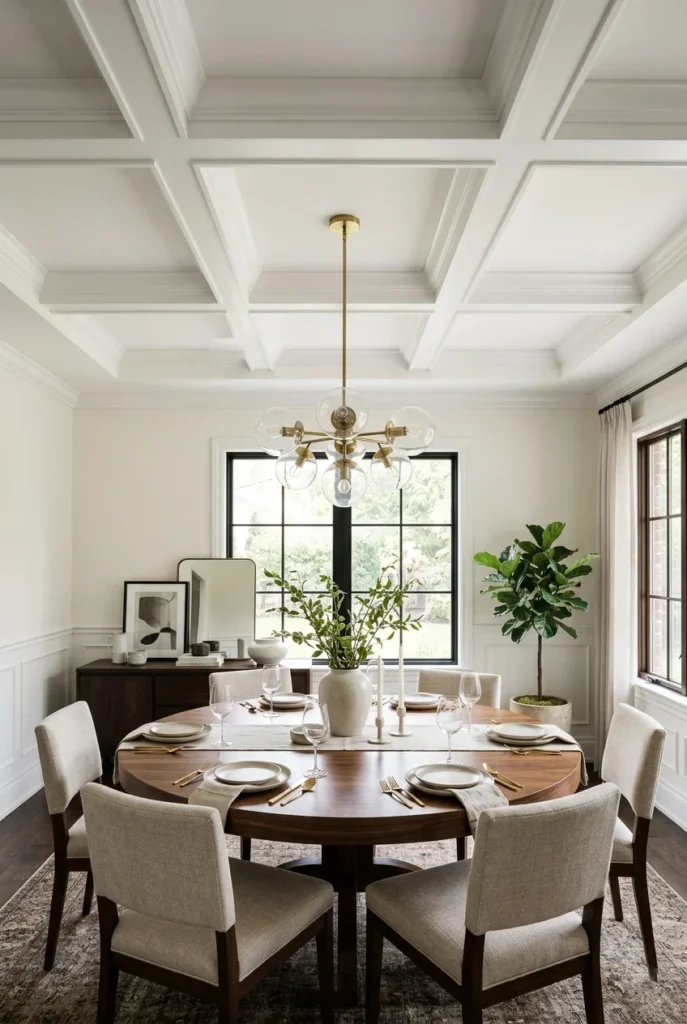
A coffered ceiling is one of the grandest classic architectural elements you can add to a home. Historically found in palaces and estate homes, it adds drama, depth, and a sense of craftsmanship to any room. In a transitional space, the coffered ceiling works best when the grid pattern is kept simple and clean — rectangular or square panels without ornate moldings. That restraint is what keeps it from feeling heavy or too formal.
Painted the same crisp white as the rest of the ceiling, a coffered grid adds visual interest overhead without making the room feel smaller. In rooms with higher ceilings, it actually brings the ceiling down to a more human scale, making the space feel more intimate and cozy. In standard-height rooms, even a shallow coffer of two or three inches makes a significant architectural impact.
Pair a coffered ceiling with a simple, modern light fixture — a linear pendant, a drum chandelier, or a cluster of globe pendants — and the combination feels very current. The ceiling detail provides the classic structure, and the fixture keeps the eye calibrated in the present. It is a very effective use of contrast that makes the overall room feel layered, designed, and lived-in.
18. Transitional Kitchen Cabinets: Two-Tone Approach
Two-tone kitchen cabinetry is one of the defining looks of transitional kitchen design. The formula is simple — white, cream, or light gray uppers paired with a deeper or bolder color on the lower cabinets. Navy, forest green, warm charcoal, sage, and deep brown are all popular choices. The uppers keep the kitchen feeling open and airy; the lowers add depth, color, and a grounded feeling.
This approach also adds visual balance to the kitchen. The lighter uppers reflect more light and help the space feel less top-heavy, while the darker lowers anchor the room and add weight at the base, where it feels most natural. It is a principle borrowed from classic design — lighter above, darker below — applied in a very contemporary way.
Hardware ties the two tones together. Brushed brass, unlacquered brass, or brushed nickel on both upper and lower cabinets creates visual continuity across the color shift. Match your faucet and light fixtures to the same hardware finish, and the kitchen suddenly feels very curated and cohesive. Two-tone cabinetry is one of the best investments you can make in a kitchen that feels both timeless and current.
19. Geometric Patterns in Classic Materials
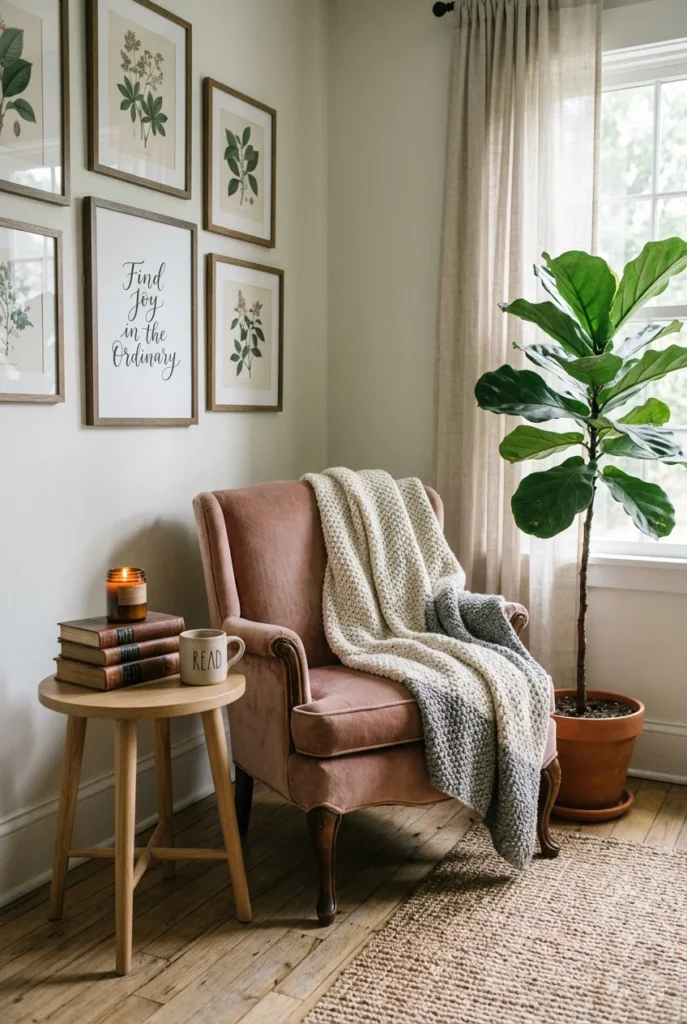
Geometric patterns have existed in design for thousands of years — from ancient Greek key borders to Victorian floor tiles — making them one of the most natural bridges between classic and modern style. In transitional design, using a geometric pattern in a classic material like tile, wallpaper, or woven textiles adds visual interest to a space without feeling trendy or disconnected from the home’s architecture.
Black-and-white hex tiles on a bathroom floor are a perfect example. The hex tile is deeply rooted in early twentieth-century design, but the bold graphic pattern reads as very contemporary. The same is true of a herringbone wood floor, a Greek key border tile, or a quatrefoil wallpaper in a soft two-tone colorway. These patterns carry both historical weight and modern visual energy simultaneously.
When using geometric patterns in a transitional space, keep them confined to a single defined area rather than spread throughout the room. A patterned floor with plain walls, or patterned wallpaper on a single accent wall, lets the pattern breathe and read clearly. The rest of the room’s simplicity gives the pattern the space it needs to do its visual work without overwhelming the senses.
20. Natural Stone Flooring With Underfloor Warmth
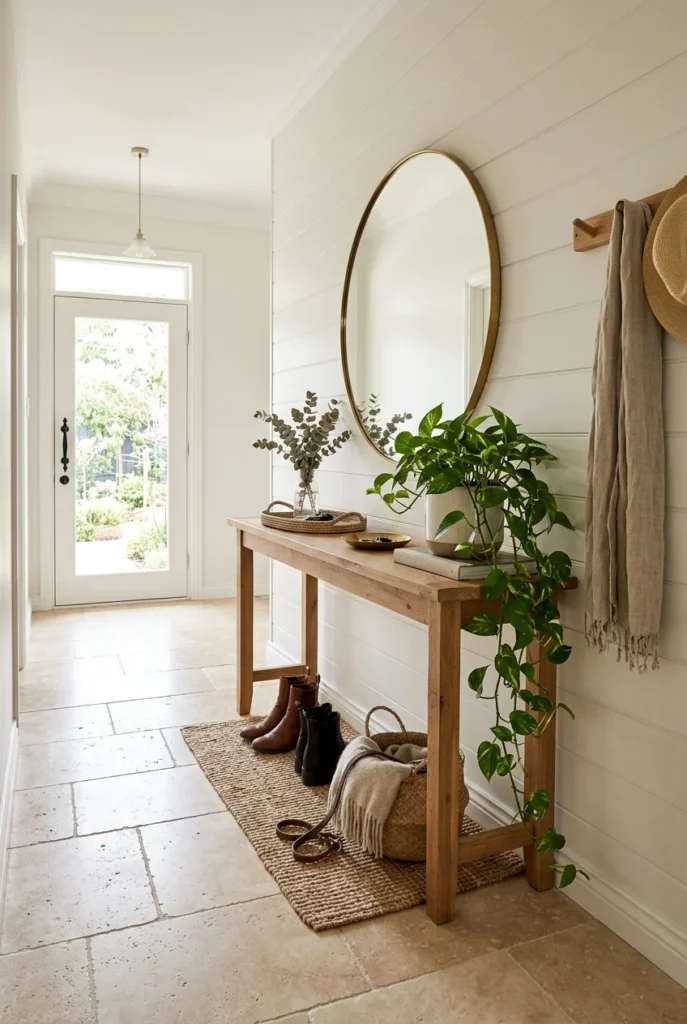
Natural stone flooring is one of the oldest and most enduringly beautiful flooring choices in interior design. Limestone, travertine, slate, and marble floors appear in homes across centuries and continents because they are genuinely timeless. In a transitional home, large-format stone tiles — 24×24 inches or larger — feel very current because of their scale, even as the material itself is deeply rooted in classic design.
The challenge with stone floors is temperature — they can feel cold underfoot, especially in colder climates. Underfloor heating solves this completely and is one of those invisible investments that transform how a room feels day to day. A stone floor with radiant heat underfoot feels deeply luxurious and is a very practical comfort choice for entryways, bathrooms, and kitchens.
In rooms where you want to soften the stone floor, layer a large natural-fiber or wool rug over it. The contrast between the cool, hard stone and the warm, soft rug creates exactly the kind of material dialogue that transitional design is built on. The stone carries the architecture; the rug creates the warmth. Together they make a room that feels both grand and genuinely livable.
21. Sleek Hardware on Traditional Cabinet Shapes
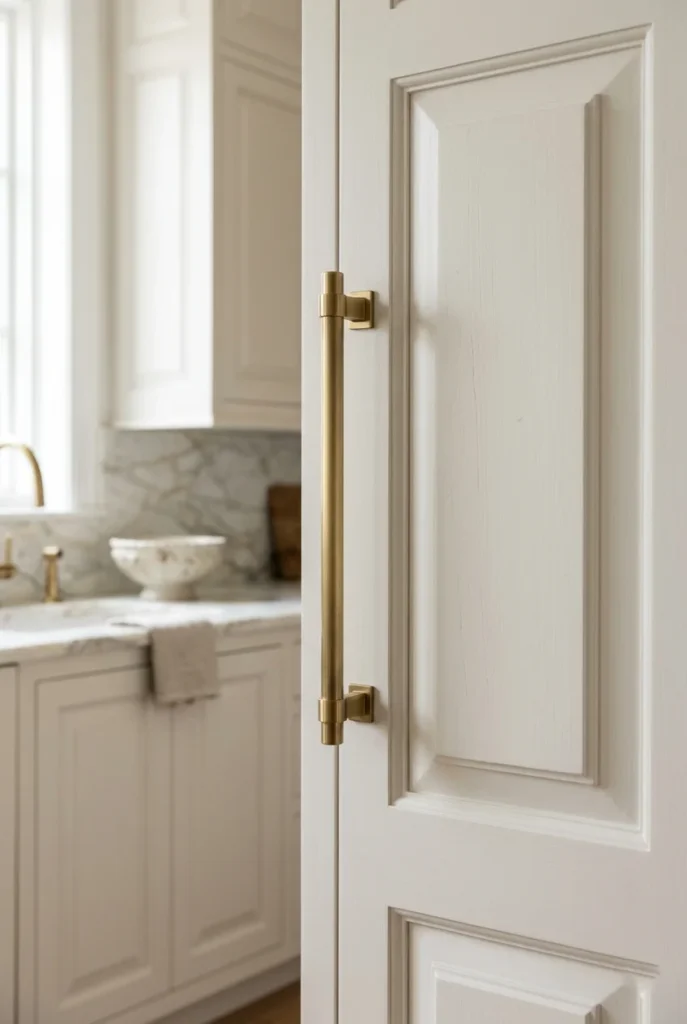
Cabinet hardware is one of the most underestimated elements in a kitchen or bathroom. It is also one of the easiest and most affordable ways to shift a room’s style from purely traditional to beautifully transitional. The key move is putting modern hardware shapes — long bar pulls, simple ring pulls, or minimal knob designs — on traditional raised-panel or inset cabinet doors. The classic form of the cabinet and the modern edge of the hardware create a perfect balance.
Brushed brass and brushed nickel are the most popular hardware finishes in transitional design right now because both feel current without being trendy. Brushed brass adds warmth and a slight vintage quality without being ornate. Brushed nickel is cooler and cleaner, bridging modern and classic without leaning too far in either direction. Choose one finish and use it consistently throughout the kitchen and bathrooms for cohesion.
Replacing cabinet hardware is one of the single best return-on-investment changes you can make in a kitchen update. A few hundred dollars in new hardware can make a ten-year-old kitchen feel completely current. It is one of the first things stylists and staging professionals do when preparing a home — because it consistently and dramatically works every single time.
22. Gallery Wall Mixing Photographs and Illustrations
A well-curated gallery wall is one of the most personal design statements you can make in a transitional home. The mix is what makes it transitional — botanical prints that nod to classic illustration traditions, black-and-white photography that feels timelessly modern, and perhaps one abstract piece that grounds the whole arrangement in the contemporary. Together, they create a wall that looks collected, personal, and deeply intentional.
The framing is as important as the art itself. In transitional spaces, a cohesive frame approach — all black, all natural wood, all white, or a mix of black and natural — keeps the wall looking curated rather than chaotic. You do not need identical frames, but they should feel like they belong to the same family. Avoid mixing ornate gold frames with sleek metal frames on the same wall — that crosses from transitional into genuinely eclectic.
Lay your gallery wall arrangement out on the floor before putting any nails in the wall. Adjust the spacing and grouping until the overall shape feels balanced — not necessarily symmetrical, but visually even. A gallery wall that is too tightly packed feels heavy; one that is too spread out loses its impact. The right spacing, typically two to three inches between frames, lets each piece breathe while keeping the grouping cohesive.
23. Freestanding Bathtub in a Classic Shape
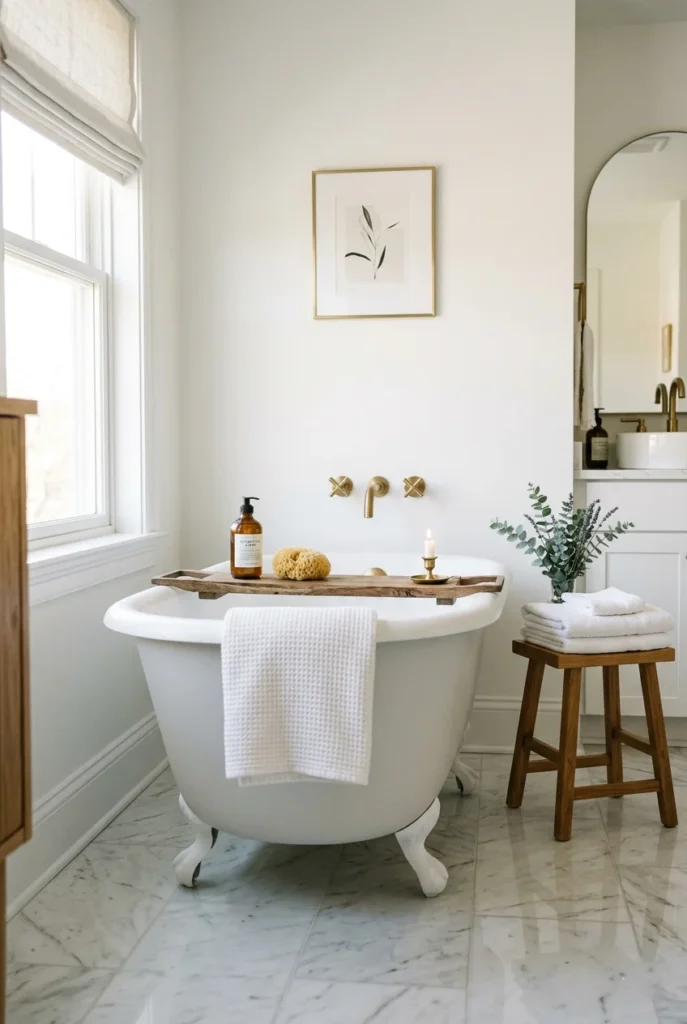
A freestanding bathtub is one of the most effective single pieces you can add to a bathroom to create a transitional feel. The clawfoot or slipper tub silhouette is deeply rooted in Victorian and Edwardian bathroom design, but in a matte white or matte stone finish, sitting on a clean marble or large-format tile floor, it feels completely at home in a contemporary space. It is one piece that does enormous design work simply by existing.
The faucet and fixtures you pair with the tub matter significantly. A wall-mount tub filler in brushed brass or brushed nickel looks clean and modern while still having enough warmth to complement the classic tub shape. Avoid shiny chrome fixtures, which tend to push the look either too clinical or too traditional. The brushed finishes sit in the middle — elegant, warm, and current.
Keep everything else in the bathroom simple when you have a statement freestanding tub. Plain large-format wall tiles, a simple floating vanity, and clean open shelving for towels and accessories. The tub is doing the heavy design lifting, so everything else should create a calm backdrop for it. A simple Roman blind at the window and a large round mirror complete the look with minimal fuss.
24. Reclaimed Wood Accents in a Modern Space
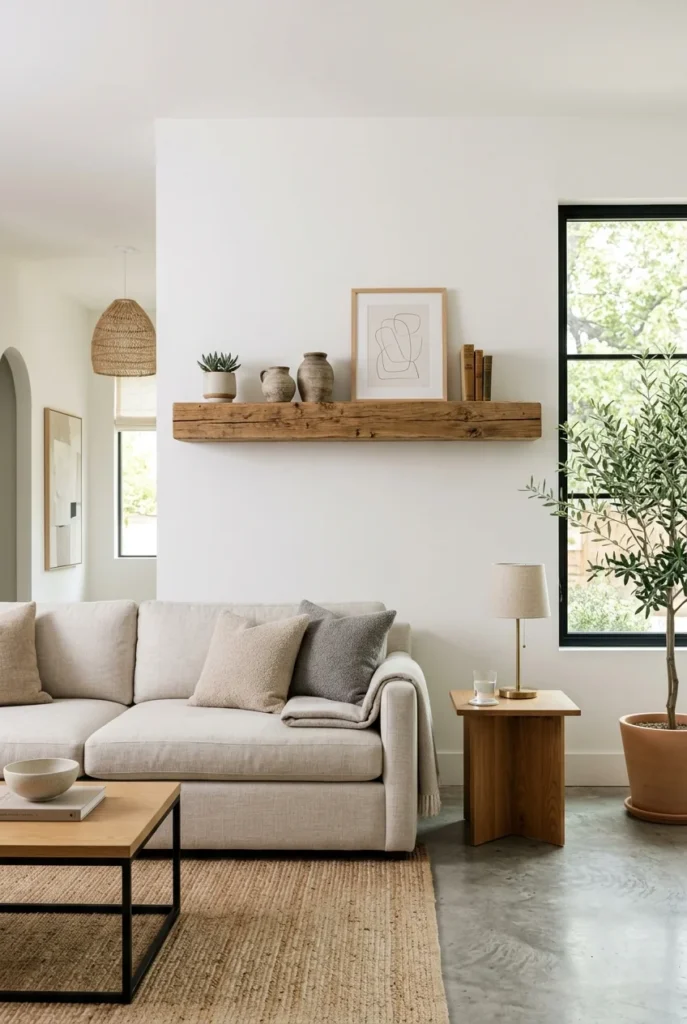
Reclaimed wood brings age, history, and texture to a modern space in a way no other material can. A single reclaimed wood beam, shelf, dining table, or accent wall introduces character that new materials simply cannot. The weathered grain, nail holes, and natural variations in old wood tell a visual story deeply rooted in traditional craftsmanship, while feeling completely at home in a modern interior.
The contrast between reclaimed wood and clean, modern surroundings is one of the most compelling material dialogues in transitional design. A raw reclaimed-wood dining table paired with modern upholstered chairs and simple industrial-style pendant lights creates a room that is simultaneously warm, rustic, and current. The table grounds the space with its history; the chairs and lighting keep it from feeling too barn-like.
Reclaimed wood accents also add an environmental dimension that resonates with many homeowners today. Using salvaged materials is a sustainable choice that connects your home to the past in a literal, material way. Whether it is a reclaimed wood headboard, a kitchen floating shelf, or a barn door in a home office, these pieces add depth and authenticity that no new material can quite match.
25. Formal Dining Room Made Casual With Mixed Seating
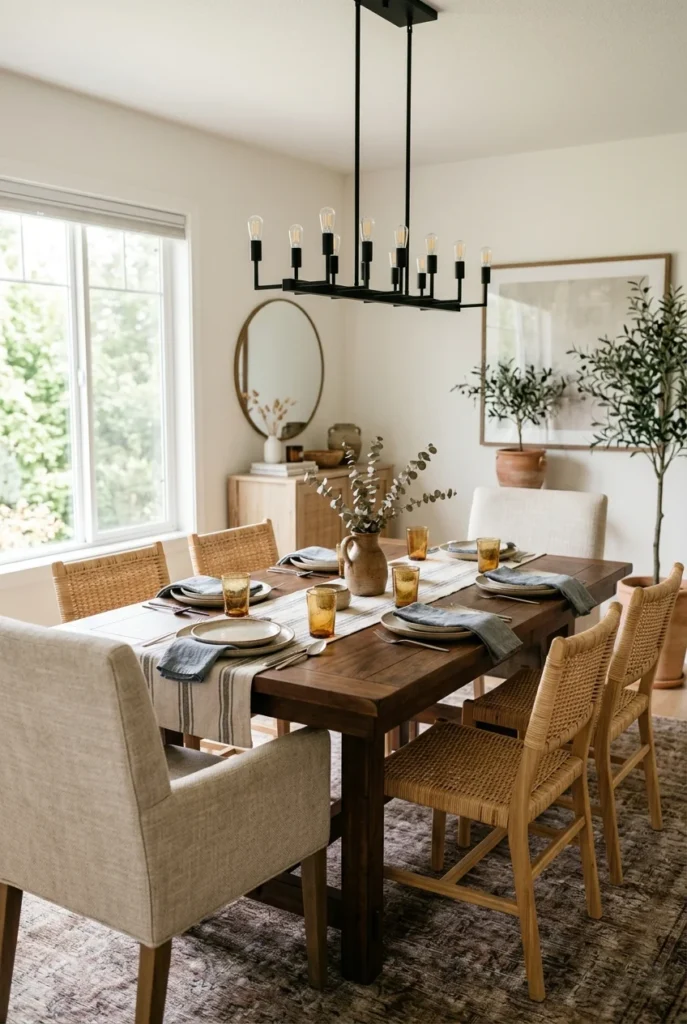
One of the hallmarks of transitional design is taking something traditionally formal and making it feel more approachable. The formal dining room is a perfect example. A classic rectangular dining table with matched chairs has always been the conventional approach — but mixing seating types creates a room that is both more interesting and more relaxed, which is exactly the transitional balance.
The most common version of this is the host-and-side chair arrangement. The two chairs at the heads of the table are upholstered with arms — more formal, more substantial, more traditional. The side chairs along the length of the table are simpler: woven rattan, painted wood, or minimal upholstered chairs without arms. This combination creates visual rhythm while keeping the overall feel casual enough for everyday use.
Mismatched dining chairs have become one of the most pinned and sought-after dining room looks on Pinterest for exactly this reason. They feel personal and collected rather than showroom-perfect. In a transitional space, a mix of an antique or vintage-style chair with modern seating does the same work as mixing any two eras of design — it creates a room that feels curated and lived-in rather than staged.
26. Roman Shades in Natural Materials
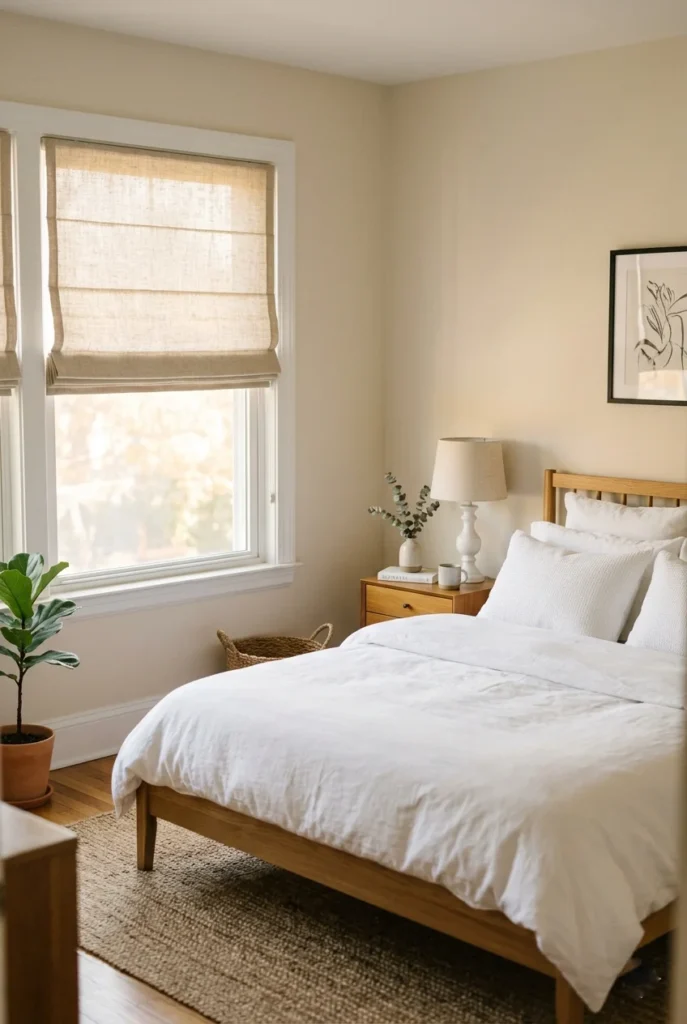
Window treatments are often the last thing people think about in a room design, but they have an enormous impact on the overall feel. Roman shades in natural materials — linen, cotton, jute, or bamboo — are one of the most transitional window choices you can make. They are structured and clean when raised, which gives them a modern quality. When lowered, they fold in a soft, layered way that feels warm and classic.
Natural linen Roman shades in particular work in almost any room and with almost any style of furniture. They filter light beautifully, giving rooms a warm, soft glow that feels very different from the harsh light through a bare window or the blocked darkness of blackout curtains. In bedrooms, a light-filtering linen shade is often all the window treatment you need — clean, simple, and quietly beautiful.
The flat Roman shade — without the traditional folds when raised — is the most transitional version. It has the structure and precision of a modern blind with the warmth and texture of soft fabric. Paired with simple curtain rods in a brushed metal or natural wood finish, it completes a window treatment that is functional, beautiful, and timeless in exactly the way transitional design strives to be.
27. Transitional Entryway That Sets the Tone
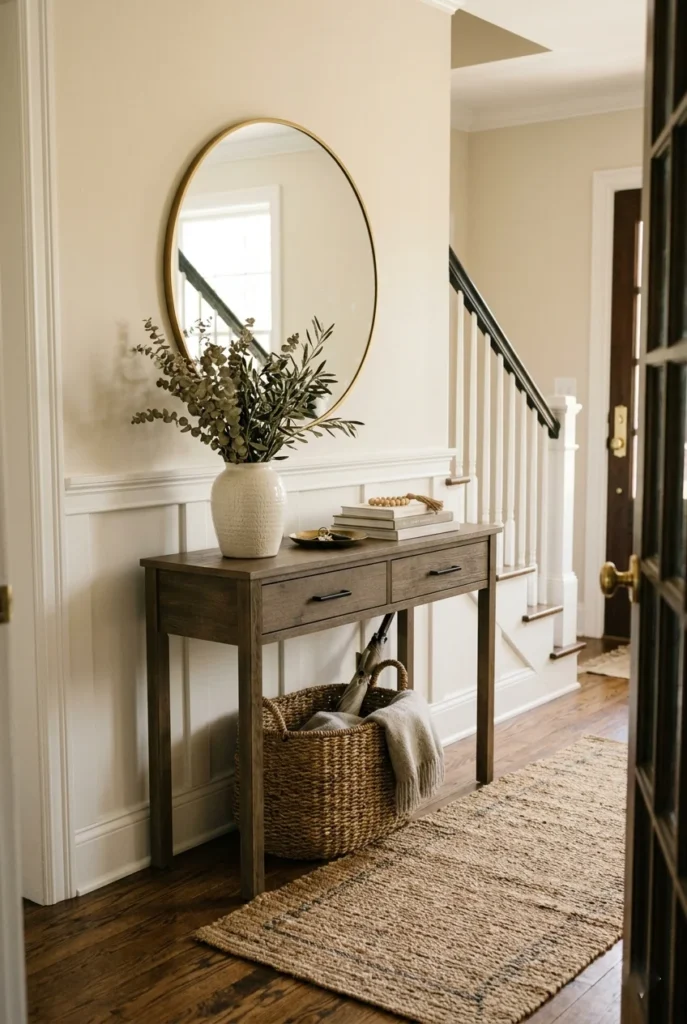
The entryway is the first room people see when they walk into your home, and in transitional design, it sets the tone for everything that follows. A well-designed transitional entryway is welcoming but not fussy — it has warmth and character without being cluttered or overly formal. A simple wood console table, a classic round mirror above it, a narrow natural fiber runner, and one or two well-chosen accessories are all you need.
The console table itself is a great transitional piece when chosen thoughtfully. A slim table in natural wood with clean, simple lines works in both classic and modern contexts. Style it with a ceramic vase, a small stack of books, and a tray for keys — functional but beautiful. Under the table, a woven basket for shoes or bags adds texture and practical storage without looking untidy.
Lighting in the entryway is also worth investing in. A simple pendant or flush-mount fixture in a warm metal finish — brass, bronze, or aged nickel — creates a warm glow that makes anyone who walks through the door feel immediately welcome. Mirror and light together create the illusion of more space and more depth, making even a narrow entryway feel generous and well-designed. It is a small space that makes a big first impression.