
12 Ways to Clean a Cast Iron Skillet Without Ruining It
A cast iron skillet is one of the most loved pieces in any kitchen, but cleaning it the wrong way can strip its seasoning fast. Many home cooks scrub too hard, soak it in the sink, or reach for the wrong soap without knowing the damage it causes. That is when rust spots and sticky residue start to show up.
Learning how to clean a cast iron skillet the right way keeps it smooth, shiny, and ready to cook for years. It is not about fancy tools, just a few simple habits done consistently after every meal.
In this guide, you will find 12 easy ways to care for your skillet without ruining its finish. These tips work for beginners and long-time cast iron owners alike, and each one is simple enough to do in your own kitchen today.
1. Rinse With Hot Water Right After Cooking
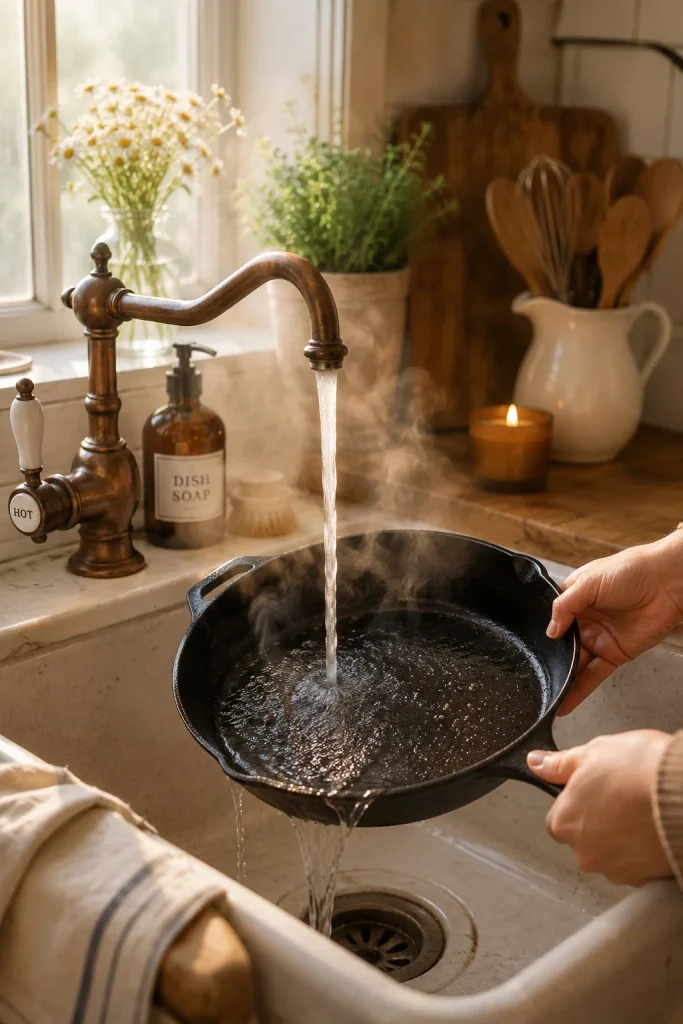
Cleaning your skillet while it is still warm makes the whole process easier. Hot water helps loosen leftover bits of food before they have a chance to dry and stick to the surface. This one small habit saves you from having to scrub harder later.
Waiting too long after a meal lets grease and food particles harden. Once that happens, you need more force to clean the pan, which can wear down the seasoning layer. Rinsing right away protects that smooth, non-stick coating you worked hard to build.
This step takes less than a minute but makes a big difference over time. It is the easiest habit to build into your kitchen routine, and it keeps your cast iron skillet looking cared for and ready for the next meal.
2. Use a Stiff Brush or Chainmail Scrubber
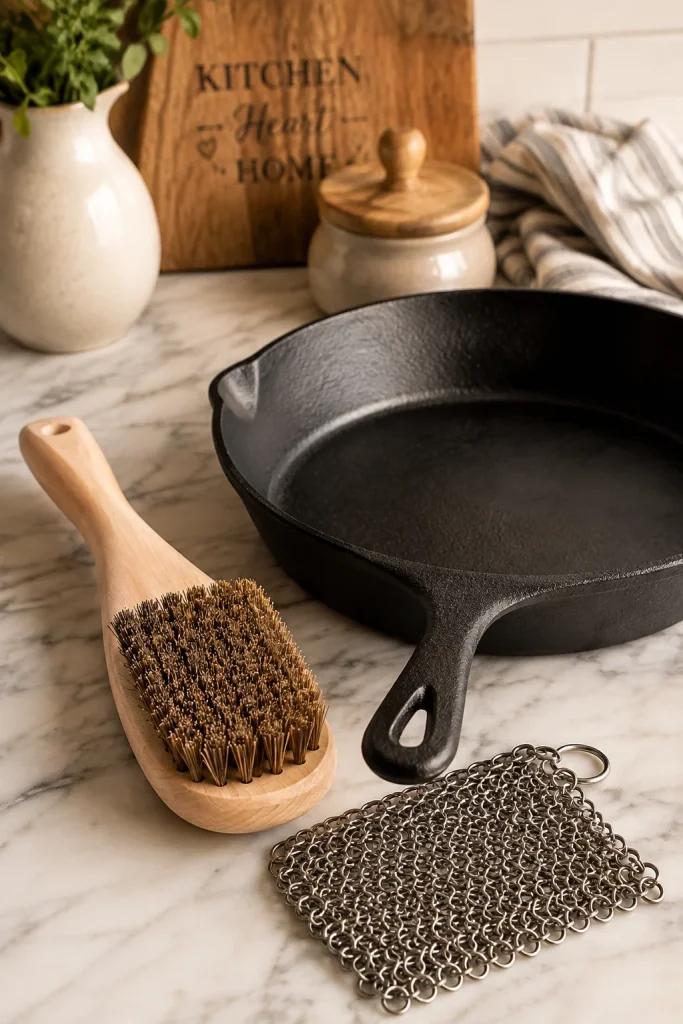
A soft sponge is fine for most dishes, but cast iron needs something with more grip. A stiff brush or a chainmail scrubber lifts stuck food without scratching the metal underneath. These tools are built specifically for this kind of cookware.
Avoid steel wool or anything overly abrasive, since these can strip the seasoning down to bare metal. Once that protective layer is gone, your pan becomes more prone to rust and sticking. A gentle but firm scrub is really all you need.
Keep a dedicated brush just for your cast iron pieces. This keeps cross-contamination low and makes cleanup part of a simple, repeatable ritual that feels almost therapeutic once you get into the habit.
3. Skip the Soap or Use It Sparingly

There is an old myth that soap ruins cast iron completely, but that is no longer entirely true. Modern dish soap is much gentler than it used to be, so a small amount used occasionally will not destroy your seasoning. The real danger is heavy scrubbing paired with soap.
That said, less is more here. A tiny drop is enough to cut through grease without breaking down the oil layer that keeps your pan non-stick. Using too much too often can slowly wear away the coating you have built up.
If you want to stay traditional, plain hot water and a brush usually get the job done anyway. Either method works as long as you dry the pan thoroughly right after, which matters more than the soap debate itself.
4. Tackle Stuck-On Food With Coarse Salt
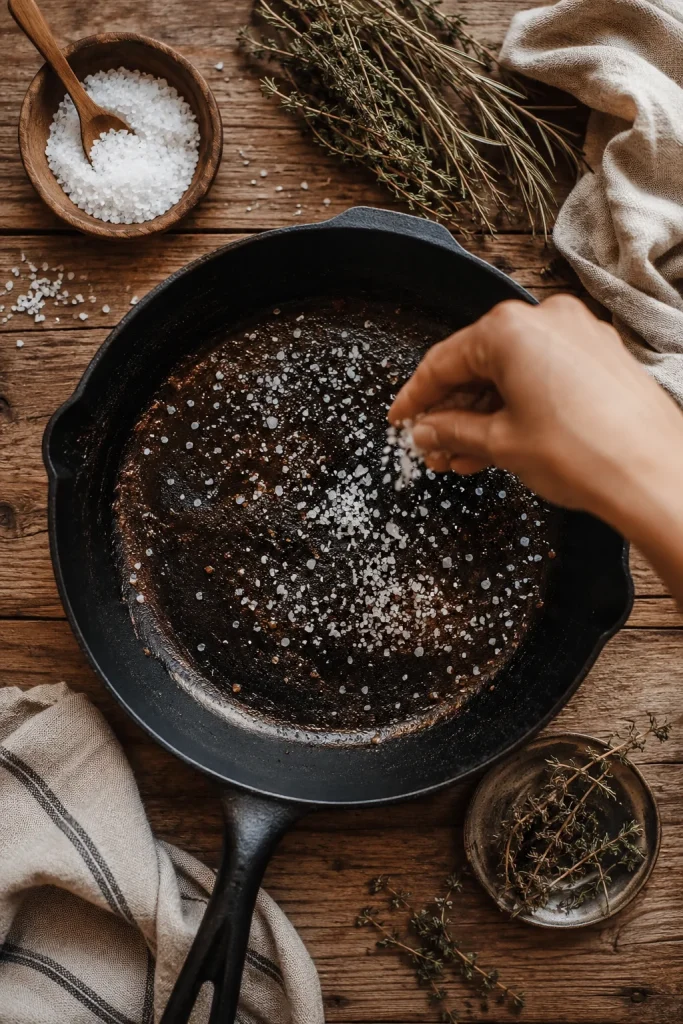
Coarse salt is a natural, gentle abrasive that works wonders on stubborn, stuck-on bits. Sprinkle a generous amount into the warm skillet and scrub in small circles with a paper towel or cloth. It lifts residue without harming the seasoning underneath.
This trick has been passed down through generations of home cooks for good reason. It costs almost nothing, uses items already in your pantry, and avoids any risk of chemical residue lingering on your cooking surface.
Once the stuck food loosens, wipe away the salt and debris, then rinse with warm water. This method is especially useful after cooking sticky dishes like cornbread, fried rice, or seared meats.
5. Dry It Immediately and Completely
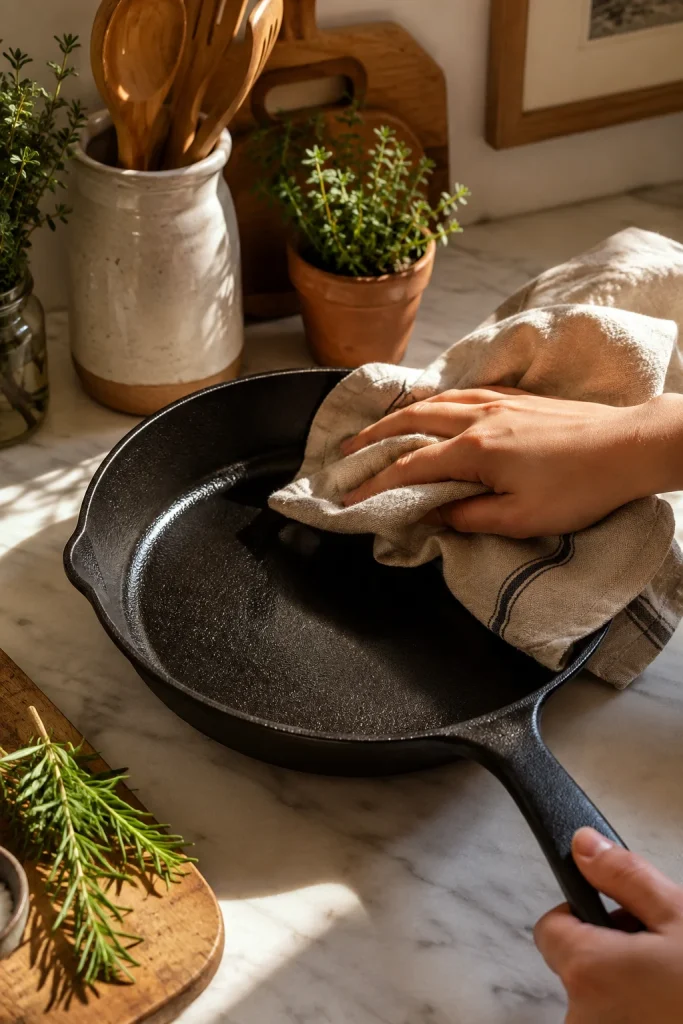
Moisture is the biggest enemy of cast iron cookware. Even a small amount of water left on the surface can cause rust spots within hours. Drying your skillet right after washing is one of the most important steps in the entire cleaning process.
Use a clean towel to wipe away all visible water, then place the pan on low heat on your stovetop for a minute or two. This extra step evaporates any moisture trapped in the metal’s pores that a towel alone cannot reach.
Skipping this step is one of the most common mistakes people make. It takes only a couple of extra minutes, but it protects your skillet from the slow, quiet damage that rust causes over time.
6. Never Soak Your Cast Iron Skillet
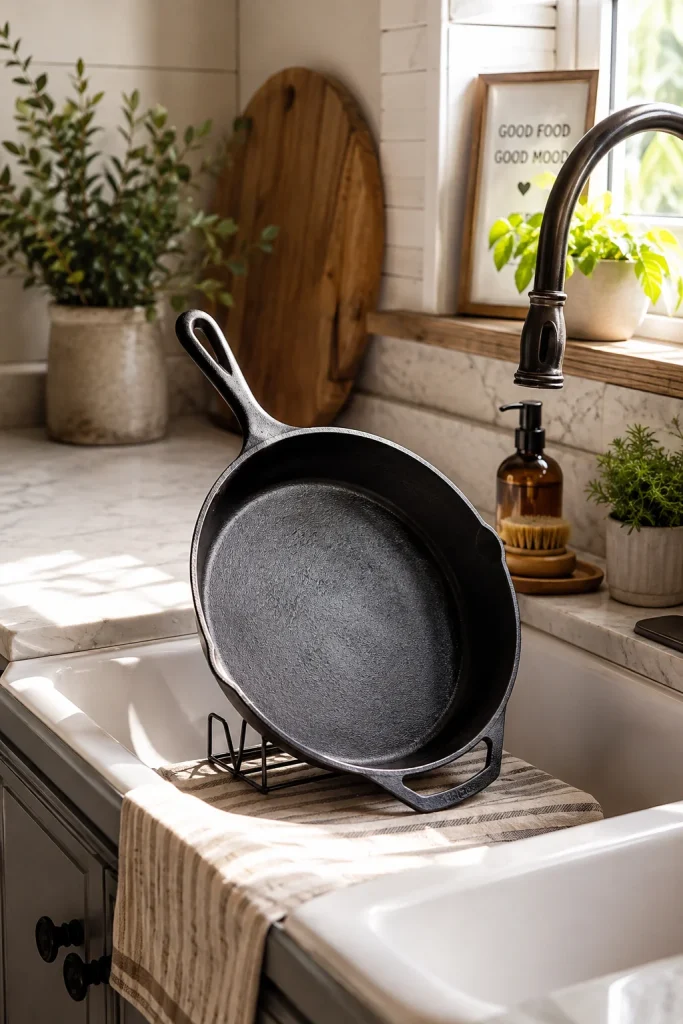
It can be tempting to leave your dirty skillet in the sink filled with soapy water, especially after a busy dinner. But soaking cast iron, even for a short period, can break down the seasoning and cause rust to form quickly.
Unlike stainless steel or non-stick pans, cast iron reacts poorly to prolonged exposure to water. The metal is porous, which means water can seep into tiny gaps and begin rusting almost immediately once it sits for too long.
If you truly cannot clean it right away, a quick rinse is far better than a long soak. Try to build the habit of cleaning cast iron shortly after use so soaking never becomes a tempting shortcut.
7. Re-Season With a Thin Layer of Oil
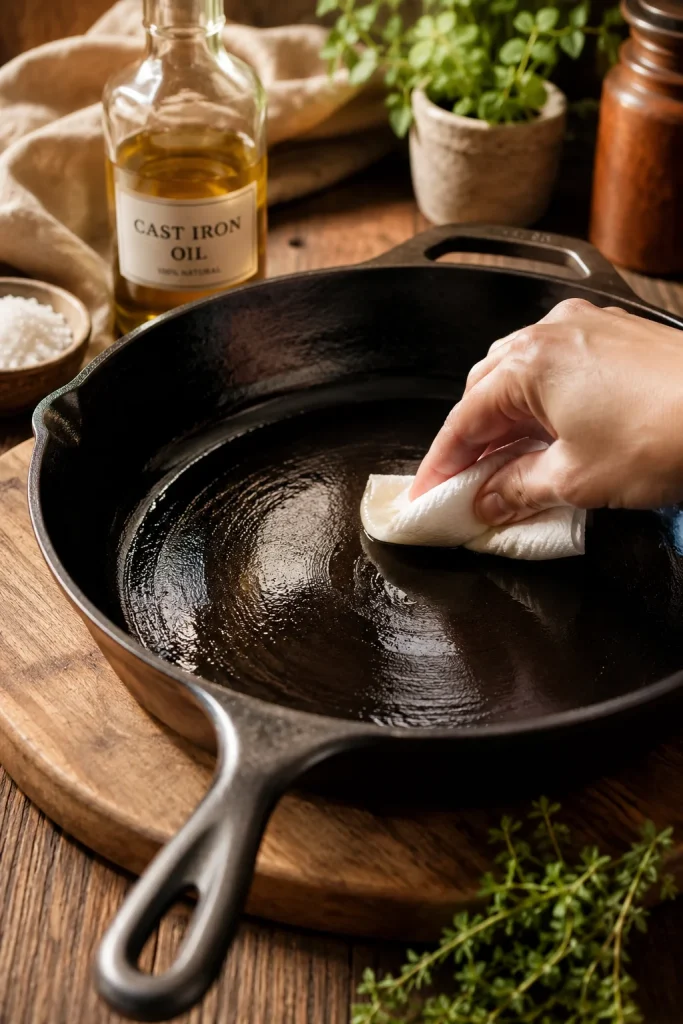
After cleaning and drying your skillet, adding a thin layer of oil keeps the seasoning strong. Use a neutral oil like vegetable, canola, or flaxseed, and rub it in with a paper towel until the surface looks lightly coated, not greasy.
This step rebuilds the protective barrier that cooking and washing slowly wear down. Think of it as skincare for your pan, a small maintenance ritual that keeps everything working the way it should over the long run.
Skipping this step occasionally will not ruin your skillet overnight, but doing it consistently after each clean keeps the surface smooth, dark, and naturally non-stick without needing store-bought sprays or coatings.
8. Heat It on the Stove to Lock In Seasoning

Once you have added a thin layer of oil, place the skillet on low heat for a few minutes. This helps the oil bond to the metal surface rather than sitting on top as a sticky film that attracts dust and residue.
Heating also finishes drying any lingering moisture you might have missed with a towel. It is a quick two-in-one step that protects against rust and reinforces the seasoning layer.
Let the pan cool naturally before storing it away. This small habit, done consistently, is often the real secret behind skillets that last for decades and only get better with age.
9. Avoid the Dishwasher at All Costs
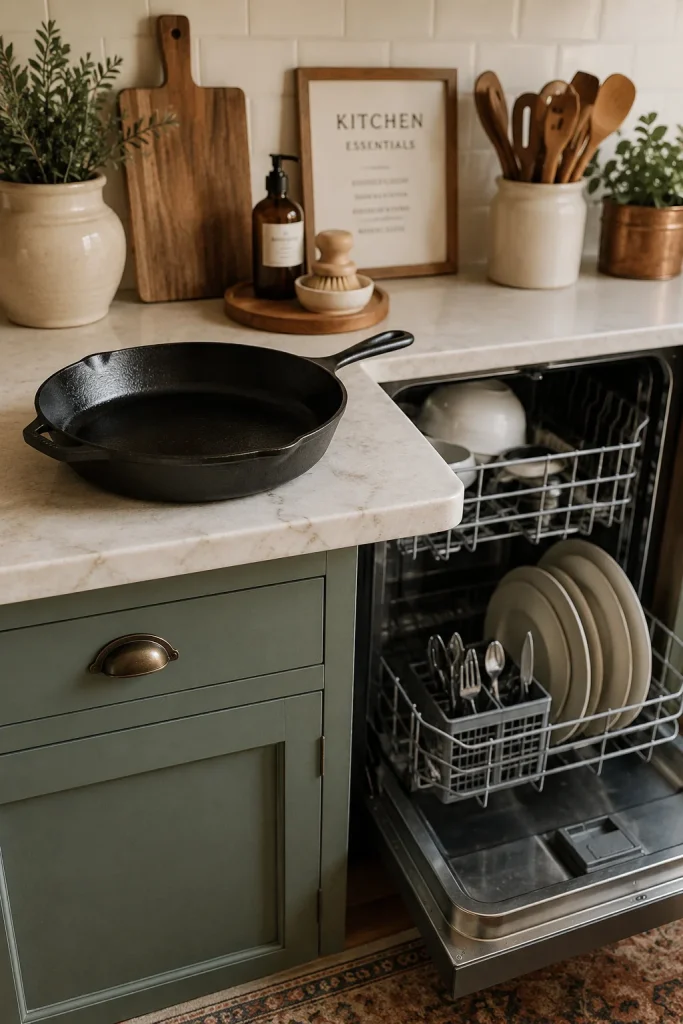
It might seem convenient to toss your skillet into the dishwasher, but this is one of the fastest ways to ruin it. The combination of harsh detergent, prolonged exposure to water, and high heat strips the seasoning almost instantly.
Dishwashers are built for materials that can handle constant moisture, and cast iron is not one of them. Even a single cycle can leave your pan looking dull, rusty, or sticky in ways that take real effort to fix.
Hand washing may take a few extra minutes, but it is the only safe method for this type of cookware. Keeping your skillet out of the dishwasher is one of the simplest rules to remember.
10. Use Chain Mail or Fine Steel Wool for Rust Spots

Rust happens sometimes, even with the best care. When it does, do not panic. A chainmail scrubber or fine steel wool can gently remove rust without damaging the underlying metal if used with a light hand.
Focus only on the rusty areas rather than scrubbing the entire surface. Once the rust is gone and the metal looks clean again, rinse, dry thoroughly, and immediately apply a fresh coat of oil to protect the exposed spot.
Catching rust early makes it much easier to fix. Checking your skillet occasionally for early signs of rust lets you address small spots before they spread into a bigger cleaning project.
11. Store It Properly to Prevent Moisture

Where you store your skillet matters as much as how you clean it. A damp cabinet under the sink or a spot near a humid stove can slowly invite rust, even on a well-seasoned pan.
Choose a dry area with good airflow, such as an open shelf or a hanging rack. If you stack it with other cookware, place a paper towel or cloth between the pieces to absorb any leftover moisture and prevent scratching.
Good storage habits protect all the effort you put into cleaning and seasoning. It is a small detail that many people overlook, but it plays a big role in how long your skillet stays in great shape.
12. Know When to Strip and Re-Season From Scratch
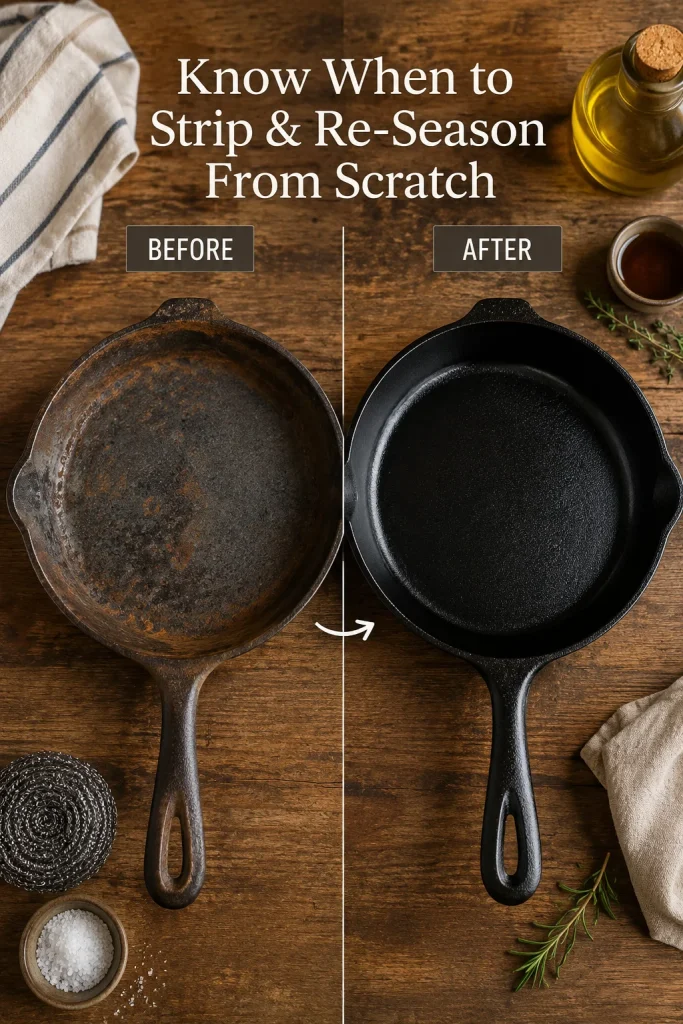
Sometimes a skillet needs more than a simple clean. If the seasoning looks patchy, sticky, or covered in rust, it may be time to strip it down completely and start fresh. This is not a failure; it is normal maintenance.
To strip it, scrub the entire surface with steel wool until the seasoning is fully removed and the metal looks dull and grey. Wash, dry completely, then apply several thin layers of oil, baking the pan upside down in the oven between coats.
This process takes a bit more time, but it brings even a badly neglected skillet back to life. Once re-seasoned, it will look and cook just like new, ready for many more years of use.
Final Thoughts
Caring for a cast iron skillet does not have to be complicated once you know the right habits to follow. Rinsing it while warm, drying it fully, adding a thin layer of oil, and storing it properly are small steps that add up to a pan that lasts a lifetime. Avoid soap overload, skip the dishwasher, and handle rust early, and your skillet will only get better with age. With a little consistency, cleaning cast iron becomes second nature, and your kitchen keeps a piece of cookware that feels both practical and beautifully timeless.