

10 Ways to Clean a Concrete Patio Like a Pro
Your patio is supposed to be the prettiest spot in your yard, but dirt, algae, and old stains can make it look tired fast. If you want to clean a concrete patio without wasting a whole weekend, you need a plan that actually works. The good news is you don’t need fancy tools or a professional crew to get it done.
Most homeowners don’t know where to start, so the grime keeps piling up year after year. A little know-how turns a rough, stained surface back into a clean outdoor space you’re proud of. Once you learn the right order of steps, the whole job feels a lot less overwhelming.
This guide breaks down ten simple methods anyone can use, from soap and water to pressure washing. Each one tackles a different kind of mess, so you can mix and match based on what your patio actually needs. By the end, you’ll have a concrete patio that looks fresh, bright, and ready for summer gatherings.
1. Sweep and Remove Loose Debris First

Before any cleaner touches your patio, clear off the loose stuff sitting on top. Leaves, twigs, dirt, and dust settle into every crack over time, and skipping this step makes everything muddier later. A stiff outdoor broom or a leaf blower works great for this first pass. Take a few extra minutes around furniture legs and corners where debris tends to hide.
This step might feel basic, but it saves you a ton of scrubbing time down the road. Wet debris turns into a sticky paste the moment you add water or soap, and that paste is much harder to remove. Sweeping first means your cleaning solution actually reaches the concrete instead of just soaking into a pile of dirt.
Think of this as prepping a canvas before you paint. A clean, debris-free surface lets you see the real condition of your patio, including any stains you might have missed. Once it’s swept, you’ll have a much clearer picture of which cleaning method to use next.
2. Pre-Rinse With a Garden Hose
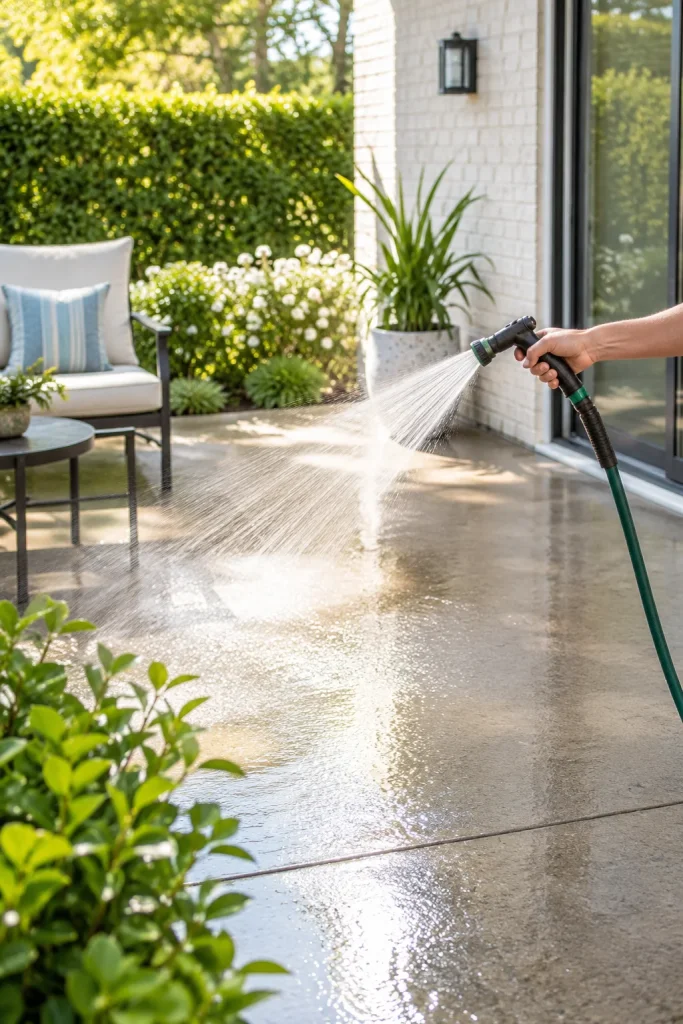
Once the loose debris is gone, grab your garden hose and give the whole patio a good soak. This loosens dust, pollen, and light grime that’s settled into the surface. A pre-rinse also helps you spot problem areas like dark stains or mossy patches that need extra attention. Start from one corner and work your way across in even strips so you don’t miss any spots.
Water pressure from a regular hose is gentle enough not to damage the concrete, which makes this step safe for older or more delicate patios. It’s also a great way to test how bad the staining really is once the surface is wet. Some marks that looked permanent when dry actually lighten up just from a simple rinse.
This step sets the stage for whatever cleaning method comes next, whether that’s a homemade solution or a store-bought cleaner. Wet concrete absorbs cleaning products more evenly than dry concrete, so your next step will work better because of this rinse. It only takes a few minutes but makes a noticeable difference in your final results.
3. Make a Simple Dish Soap and Water Solution
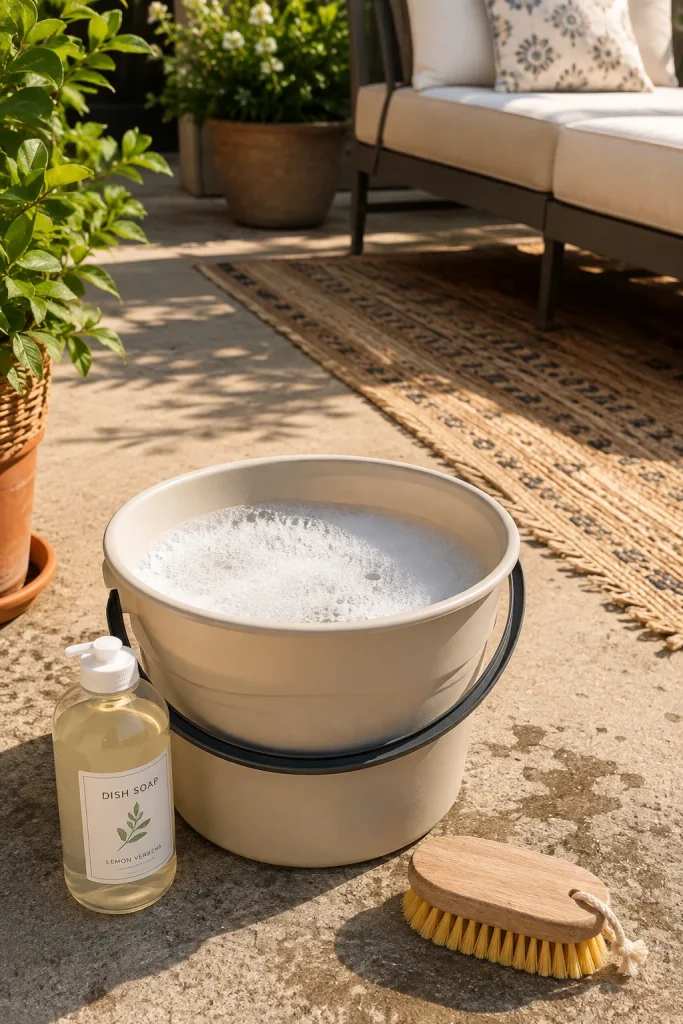
For everyday dirt and light stains, you really don’t need anything fancy. Mix a few drops of dish soap into a bucket of warm water, and you’ve got a gentle cleaner that’s safe for almost any concrete surface. This combo cuts through grease, dust, and general grime without harsh chemicals. It’s also budget-friendly, since you probably already have the ingredients at home.
Pour the soapy water over small sections of the patio and let it sit for a couple of minutes. This gives the soap time to break down dirt before you start scrubbing. Working in sections keeps the job manageable and prevents the solution from drying out before you can rinse it away.
This method works especially well for patios that need a routine refresh rather than heavy stain removal. It’s gentle enough to use every few weeks without wearing down the concrete’s surface. Many homeowners keep this as their go-to method for regular maintenance between deeper cleanings.
4. Tackle Tough Stains With Baking Soda
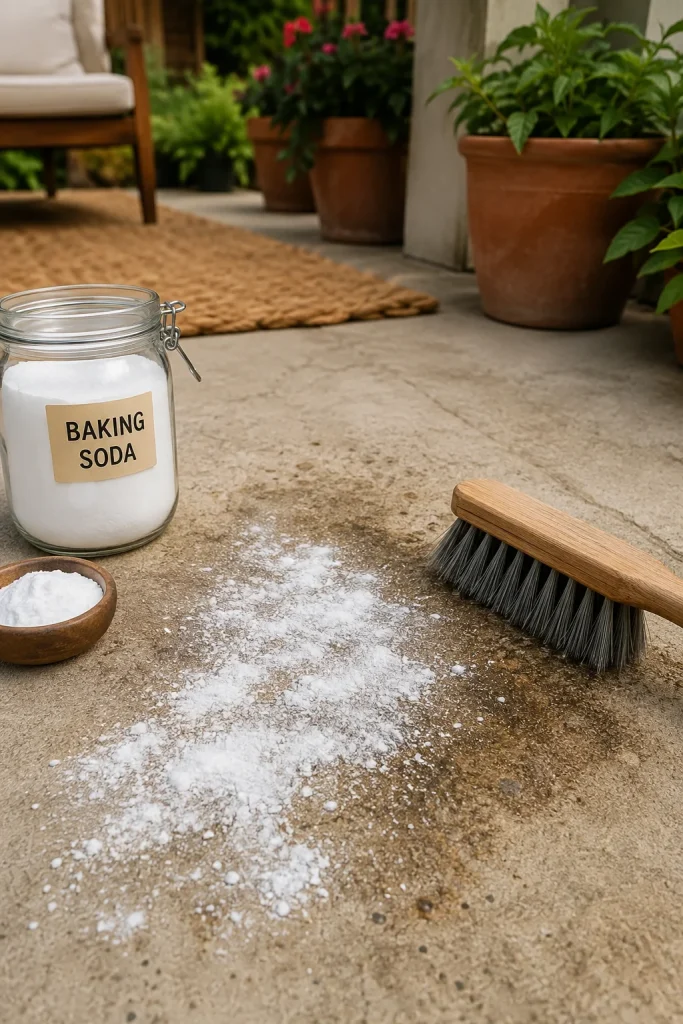
Baking soda is one of those pantry staples that works wonders outside the kitchen too. Sprinkle it directly onto stubborn stains, then add a little water to form a paste. The mild abrasive quality of baking soda helps lift dirt and grime without scratching the concrete surface. It’s especially handy for food spills, drink stains, or general discolouration.
Let the paste sit on the stain for at least fifteen minutes before scrubbing. This gives it time to break down whatever is causing the mark. A stiff brush works best here, since it helps work the paste into the texture of the concrete without damaging it.
Rinse thoroughly once you’re done scrubbing, since leftover residue can attract more dirt. This method is especially popular because it’s non-toxic and safe around kids and pets. It’s a great middle-ground option between gentle soap and stronger commercial cleaners.
5. Use Vinegar for Natural Deep Cleaning

White vinegar is a natural go-to for people who want a deeper clean without harsh chemicals. Mix equal parts vinegar and water in a spray bottle, then apply it generously across the patio. The acidity in vinegar helps break down mineral deposits, light mould, and everyday grime. It’s especially effective on areas that get a lot of foot traffic.
Let the vinegar solution sit for about ten minutes before scrubbing with a brush. This dwell time allows the acid to work into the surface and loosen buildup. Afterwards, rinse well with your garden hose to wash away both the vinegar and the grime it lifted.
Keep in mind that vinegar has a strong smell while you’re using it, though it fades quickly once the patio dries. This method is a favourite among people who prefer natural cleaning products around outdoor living spaces. It’s also inexpensive, making it easy to repeat as often as needed.
6. Remove Oil and Grease Stains With Cat Litter

Oil and grease stains are some of the trickiest marks to remove from concrete, especially near grilling areas or parking spots. Clumping cat litter is a surprisingly effective fix because it absorbs oil right out of the surface. Pour a generous layer over the fresh or old stain and let it sit overnight. The litter draws the oil up and away from the concrete pores.
Sweep away the litter the next day, then follow up with dish soap and warm water to lift any remaining residue. For older, set-in stains, you may need to repeat this process a couple of times. Patience really pays off here, since oil stains rarely disappear after just one treatment.
This trick is especially useful for patios near outdoor kitchens or grilling stations where spills are common. It’s a low-cost solution that doesn’t require any special tools or store-bought products. Many homeowners are surprised at how well something so simple actually works.
7. Scrub With a Stiff Bristle Broom

A stiff bristle broom is one of the most underrated tools for cleaning concrete. Unlike a soft broom meant for sweeping, this one is built to scrub grime deep into textured surfaces. Use it after applying any cleaning solution to really work the product into the concrete. The bristles reach into small grooves and rough patches that a sponge or cloth might miss.
Work in small sections, applying firm pressure in a back-and-forth motion. This method is especially helpful for larger patios where scrubbing by hand would take forever. It also gives you more control than a pressure washer, which can be useful for delicate or decorative concrete.
Rinse each section as you go so the loosened dirt doesn’t have a chance to settle back in. This step is often the difference between a patio that looks okay and one that looks truly refreshed. It pairs well with almost any cleaning solution mentioned earlier in this list.
8. Pressure Wash for a Deep Clean
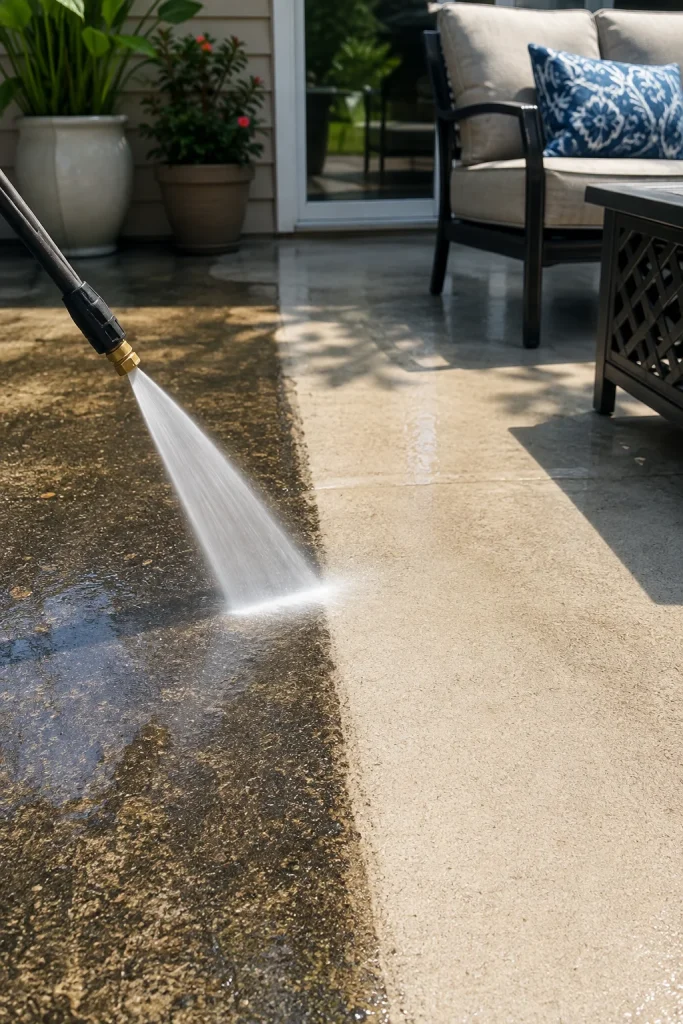
When soap and scrubbing aren’t cutting it, a pressure washer brings serious power to the job. It blasts away built-up grime, algae, and stubborn stains that other methods can’t fully remove. Most home improvement stores rent these machines, so you don’t need to own one to get great results. Just make sure to use a wide-angle nozzle to avoid gouging the concrete.
Keep the nozzle moving at all times and maintain a consistent distance from the surface. Holding it too close in one spot for too long can etch lines into the concrete. Working in overlapping passes gives you even, streak-free results across the whole patio.
This method works best for older patios with years of built-up dirt or for surfaces that haven’t been cleaned in a long time. It’s also great before sealing your concrete, since it removes everything that could trap moisture underneath a sealant. Just remember to let the patio fully dry before moving on to any additional treatments.
9. Treat Mould and Mildew With Oxygen Bleach

Shaded, damp patios often develop mould or mildew, which can make concrete look dingy and even slippery. Oxygen bleach is a gentler alternative to chlorine bleach and works well without damaging surrounding plants or grass. Mix it according to the package instructions, then pour it generously over affected areas. Let it sit for the recommended time so it can break down the mould at its source.
Scrub the treated areas with a stiff brush to lift the mildew away from the concrete’s texture. This combination of soaking and scrubbing tends to work better than either step alone. Rinse thoroughly afterwards to remove any leftover residue and prevent it from attracting new growth.
Mould and mildew tend to return if the underlying moisture problem isn’t addressed, so consider improving drainage or airflow around shaded patio areas. Regular treatments during humid months can help keep this issue from becoming a recurring headache. This method is especially useful for patios that stay damp under trees or covered structures.
10. Seal Your Patio to Keep It Cleaner Longer

Once your patio is spotless, sealing it helps protect all that hard work. A concrete sealer creates a protective layer that repels water, oil, and everyday dirt before it can soak into the surface. This makes future cleanups faster and easier, since grime sits on top instead of sinking in. Most sealers are simple to apply with a roller and don’t require any special skills.
Choose a sealer designed for outdoor use, since it needs to handle sun exposure, rain, and temperature changes. Apply it on a dry, mild day for the best results, and avoid walking on the patio until it’s fully cured. This small extra step can add years of protection to your concrete.
Sealing isn’t just about looks, though it does give your patio a nice, finished appearance. It also helps prevent cracking and staining caused by long-term exposure to the elements. Many homeowners find that resealing every couple of years keeps their patio looking new with minimal effort.
Final Thoughts
Cleaning a concrete patio doesn’t have to be a huge, stressful project once you know which method fits which mess. From a simple sweep and soapy rinse to deeper treatments like pressure washing or oxygen bleach, there’s a solution for every type of stain and every level of grime. Sealing your patio at the end locks in all that effort and keeps your outdoor space looking fresh for much longer. With these ten methods in your back pocket, you can keep your patio clean, bright, and ready for whatever the season brings.